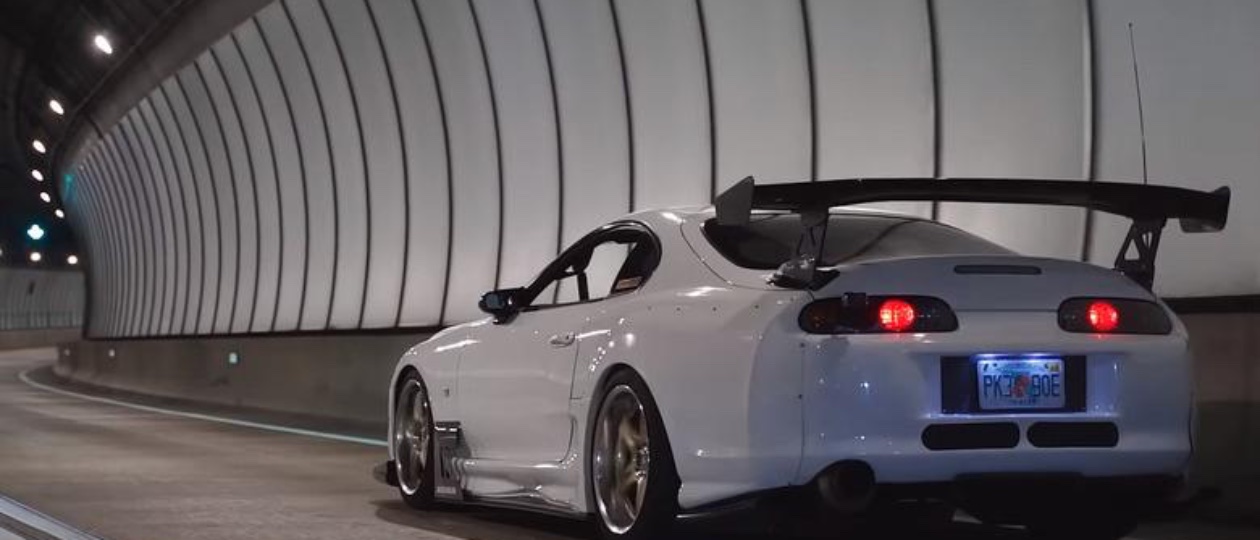
Toyota Supra MK4 Buyer's Guide: The Car That Became a Cultural Monument
toyota supra-mk4 · 1993–2002 · $50,000–$180,000
The Toyota Supra MK4 is the car that transcended its era to become a cultural monument, with the 2JZ-GTE engine now worth more than the chassis it sits in -- a future classic whose values reflect not just automotive merit but its singular position in global car culture.
History
The Toyota Supra MK4 is the rare car that became more famous after it was discontinued than it ever was during production. When the A80-generation Supra launched in 1993, it was critically acclaimed but commercially modest -- an expensive, heavy grand tourer that competed against the Porsche 911, Chevrolet Corvette, and its own stablemate, the Lexus SC300. Toyota sold approximately 11,000 units in the United States over five model years before withdrawing it from the American market in 1998. In Japan, production continued through 2002, but total worldwide production across the car's entire run was only around 50,000 units.
What happened next was unprecedented. The Supra MK4 became the centerpiece of a global car culture revolution. The tuning community discovered that the 2JZ-GTE engine could handle astonishing power levels on stock internals -- 600, 800, even 1,000 horsepower with bolt-on modifications and a larger turbocharger. Internet forums catalogued these builds obsessively. Magazine features mythologized the car. And then, in 2001, The Fast and the Furious put a bright orange Supra on movie screens worldwide, cementing its status as the definitive icon of the import tuning movement.
The engineering that made all of this possible started with Toyota's decision to build the 2JZ-GTE as the most robust inline-six engine in production. The iron block featured a closed-deck design with thick cylinder walls that could support boost pressures far exceeding the factory 10 PSI. The forged steel crankshaft, forged connecting rods, and cast aluminum pistons were overbuilt for the stock 320-horsepower rating. The oil system used a girdle-style main bearing support that maintained crankshaft alignment under extreme loads. Toyota essentially built a racing engine and detuned it for street use.
The sequential twin-turbo system mirrored the approach Mazda used in the RX-7 FD -- a small primary turbo for immediate response and a larger secondary turbo for top-end power. In factory form, the system produced 320 horsepower (276 PS in Japan, under the gentleman's agreement) and 315 lb-ft of torque. The power delivery was remarkably smooth for a twin-turbo system, with a linear surge that began at 2,500 RPM and didn't let up until the 6,800 RPM redline.
The Supra's chassis was based on a shortened version of the Lexus SC300/Soarer platform, which gave it an unusually long wheelbase for a sports car and a weight that critics noted was closer to grand tourer territory than pure sports car. At 3,500 pounds, the turbo Supra was significantly heavier than the RX-7 FD (2,800 pounds) and couldn't match the Mazda's agility through corners. But the Supra compensated with brute force, superior aerodynamics (the car's drag coefficient of 0.31 was excellent for its era), and a refinement level that made it genuinely comfortable for long-distance driving.
Toyota offered the Supra with both a six-speed Getrag V160 manual transmission and a four-speed automatic. The manual transmission was itself overbuilt -- the V160 gearbox was rated for approximately 450 lb-ft of torque and proved capable of handling significantly more in tuned applications. The automatic, a Toyota A340E unit, was less robust but featured a manual shift mode that gave drivers some control over gear selection.
The Supra's withdrawal from the US market in 1998 and from all markets in 2002 was driven by economics rather than engineering failure. The car was expensive to produce, sold in modest numbers, and faced increasingly stringent emissions and safety regulations that would have required costly redesign. Toyota chose to allocate those engineering resources elsewhere, and the Supra went quietly out of production.
The cultural afterlife of the Supra MK4 is unparalleled in automotive history. No other car has experienced such a dramatic post-production appreciation in both cultural significance and market value. The car's presence in video games (Gran Turismo, Need for Speed), films (the Fast & Furious franchise), and internet culture has created demand that far exceeds the available supply of clean examples. This isn't mere nostalgia -- it's the market recognizing that the Supra MK4 represents a specific moment in automotive engineering that cannot be replicated.
Variants
SZ (Naturally Aspirated, JDM)
The SZ was the base-model Supra sold exclusively in the Japanese domestic market. Powered by the 2JZ-GE -- a naturally aspirated version of the inline-six producing 225 horsepower -- the SZ was positioned as a comfortable grand tourer rather than a performance car. It featured a four-speed automatic transmission, less aggressive suspension tuning, and reduced brake specifications. The SZ is the least desirable Supra variant for collectors but represents relative value for those who want the Supra aesthetic without the turbo premium.
SZ-R (JDM)
The SZ-R added the six-speed manual transmission and sport-tuned suspension to the naturally aspirated powertrain. This created a lighter, more engaging driving experience than the turbo models at the expense of outright speed. Some enthusiasts seek out the SZ-R specifically as a platform for 2JZ-GTE swaps, reasoning that a clean SZ-R chassis with a transplanted turbo engine and manual transmission offers the best of both worlds at a lower total cost than a factory turbo car.
RZ (JDM)
The RZ was the top-specification JDM Supra, equivalent to the US-market Turbo but with Japanese-market-specific equipment. All RZ models featured the twin-turbo 2JZ-GTE, the six-speed Getrag manual (or optional automatic), a Torsen limited-slip differential, and sport-tuned suspension with Bilstein dampers. Late-model RZ examples (1997-2002) with the VVT-i variable valve timing system are considered the most refined iteration of the platform.
Turbo (US Market, 1993-1998)
The US-market Turbo was offered with either the six-speed manual or four-speed automatic transmission. Manual cars are dramatically more desirable -- they command a 40-60% price premium over automatic equivalents in the current market. The US-spec Turbo produced 320 horsepower (versus the JDM car's advertised 276 PS, though actual output was believed to be similar) and featured larger brakes, sport suspension, and the distinctive rear wing that became the car's visual signature.
TT 6-Speed
Within the collector market, the designation "TT 6-speed" specifically refers to the twin-turbo Supra with the six-speed Getrag manual transmission -- the most desirable configuration regardless of market. These cars represent the pinnacle of the Supra experience: full turbo power, manual engagement, and the mechanical purity that the automatic versions lack. The six-speed manual is the variant that has appreciated most aggressively, with clean examples routinely exceeding $100,000.
TT Auto
The automatic twin-turbo Supra occupies an awkward position in the market. It has the same engine and similar performance capabilities, but the four-speed automatic transmission dilutes the driving experience and, more importantly, cannot handle the power levels that make the Supra famous in tuning circles. Automatic turbo Supras trade at a significant discount to their manual counterparts -- a gap that has widened as the manual cars have appreciated into six-figure territory.
Common Issues
Turbo vs NA: The Great Divide
The first "issue" with the Supra MK4 is understanding which car you're actually looking at. The naturally aspirated 2JZ-GE and the turbocharged 2JZ-GTE share a displacement and cylinder count but are fundamentally different engines. The GE uses an open-deck block design with thinner cylinder walls, different pistons, and a lower compression ratio. It's a fine engine for a daily driver but cannot support significant power modifications without a complete rebuild. The GTE's closed-deck iron block, forged internals, and oil squirters make it the engine that built the Supra's legend.
Every potential Supra buyer needs to decide: do you want the turbo experience, or are you content with the naturally aspirated car at a substantially lower price point? There is no wrong answer, but you should make the decision before shopping, not after.
Sequential Turbo System Complexity
Like the Mazda RX-7 FD, the Supra uses a sequential twin-turbo system that relies on multiple solenoid valves, vacuum lines, and actuators to manage the transition from single to twin turbo operation. These components deteriorate with age and can cause boost-related issues including rough turbo transitions, boost spikes, and loss of secondary turbo function.
The most common failure point is the vacuum line network that controls the turbo switching mechanism. These lines harden and crack with heat cycling, causing vacuum leaks that disrupt the ECU's control of the turbo system. Replacement of all vacuum lines is a standard maintenance item for any high-mileage Supra and costs under $200 in parts.
Automatic Transmission Fragility
The A340E four-speed automatic was adequate for the factory power level but becomes a liability at higher power levels. Even at stock boost, the transmission can develop harsh shifts, delayed engagement, and eventual torque converter shudder as it ages. At modified power levels, the A340E's 3-4 clutch pack is the typical failure point, causing slipping in top gear under load.
Manual transmission Supras are free from this concern -- the Getrag V160 is one of the most robust gearboxes ever fitted to a production car and handles modified power levels with ease.
Head Gasket Weeping
High-mileage 2JZ-GTE engines can develop minor head gasket weeping at the rear of the engine, causing a slow coolant leak that's difficult to detect until it progresses. The leak typically occurs between the cooling passages and the exterior of the engine rather than into the combustion chambers, meaning it doesn't cause white smoke but does gradually deplete coolant. Regular underhood inspection for coolant residue around the head-block mating surface catches this issue early.
Differential Wear
The Supra's Torsen limited-slip differential is durable but not indestructible. High-mileage examples or cars that have been launched aggressively show differential wear through clunking on deceleration, uneven torque distribution, and whining under load. Differential rebuilds run $1,500-$2,500 at specialist shops.
Modification Quality
The Supra's tuning fame is a double-edged sword for buyers. A significant percentage of surviving turbo Supras have been modified, and the quality of those modifications varies from professional-grade to genuinely dangerous. Poorly executed turbo upgrades with inadequate fuel systems, wiring harness modifications that create fire risks, and structural reinforcement shortcuts are all common.
When evaluating a modified Supra, the quality of the work matters more than the specific modifications. A well-executed 500-horsepower build with proper fuel system, engine management, and supporting modifications is more reliable than a stock car that's been neglected. But a hacked-together build with Amazon turbo components and a hand-held tuner is a ticking time bomb.
Pricing Analysis
The Supra MK4 market is the most dramatic example of cultural appreciation translating into financial appreciation in modern automotive history. A car that could be purchased for $20,000-$30,000 as recently as 2015 now commands $50,000-$180,000 depending on configuration and condition.
Current Market Ranges (2026)
Naturally Aspirated (all markets):
- Project/high-mileage: $25,000-$35,000
- Driver-quality: $35,000-$50,000
- Excellent condition: $50,000-$70,000
Twin Turbo Automatic:
- Project/high-mileage: $40,000-$55,000
- Driver-quality: $55,000-$75,000
- Excellent condition: $80,000-$100,000
Twin Turbo 6-Speed Manual:
- Project/high-mileage: $65,000-$85,000
- Driver-quality: $90,000-$120,000
- Excellent condition: $130,000-$160,000
- Low-mileage/museum quality: $160,000-$200,000+
Market Trajectory
The Supra MK4 has already reached the territory that market analysts predicted five years from now. The twin-turbo six-speed manual has become a six-figure car, and the trajectory suggests continued appreciation as the remaining supply of clean examples shrinks.
The cultural premium embedded in Supra pricing is significant and arguably permanent. Unlike most collector cars, whose values are driven primarily by automotive merit, the Supra carries cultural significance that extends far beyond the car community. Its presence in film, gaming, and internet culture has created awareness and desire among demographics that wouldn't typically engage with the collector car market.
The Honda S2000 is tracking a similar appreciation curve but from a lower starting point, while the Mazda RX-7 FD is the closest direct comparable in terms of current pricing and appreciation rate. All three represent the golden age of Japanese sports car engineering, and all three are following the classic collector car pattern: initial depreciation, period of stability, and then exponential appreciation once the market recognizes their historical significance.
Inspection Checklist
Engine
- Compression and leakdown test: The 2JZ-GTE should show 170-185 PSI compression per cylinder with no more than 10% variance between cylinders. Leakdown should be under 10% across all six cylinders. These numbers confirm ring seal, valve seating, and head gasket integrity.
- Cold start: The engine should fire within 1-2 seconds and idle smoothly at approximately 800 RPM when warm. Rough idle, hunting RPM, or misfires suggest vacuum leaks, injector fouling, or ignition issues.
- Oil condition: Pull the dipstick and the oil fill cap. Milky residue on either indicates coolant mixing -- a head gasket issue. Oil should be clean and at the proper level.
- Turbo function: In the turbo model, drive through the full boost range in 3rd gear. Both turbos should engage smoothly with no boost spikes, hesitation, or smoke. Monitor the boost gauge for consistent readings.
- Exhaust inspection: Look for smoke under load. Blue smoke indicates oil consumption (turbo seals or valve seals). White smoke indicates coolant intrusion. Both warrant further investigation.
Transmission
- Manual 6-speed: All gears should engage cleanly with a precise, mechanical feel. The Getrag V160 has a notchy shift feel that's normal -- grinding or refusal to engage is not. Test 1-2 and 2-3 shifts under moderate throttle to check synchro condition.
- Automatic 4-speed: Check for delayed engagement in Drive and Reverse. Drive through all four gears and monitor for harsh shifts, slipping, or shuddering during the 3-4 shift under moderate load.
- Clutch (manual): Engagement should be smooth and progressive. A very high engagement point suggests a worn clutch. The factory clutch can handle stock power but will slip at higher levels.
Exterior and Structure
- VIN verification: Match VIN on the dashboard, door jamb, and firewall tag. The Supra is a high-theft, high-fraud vehicle. Verify the VIN against the title, and if possible, run a history report.
- Panel gaps and paint: Inconsistent gaps indicate previous collision repair. Check the front bumper, fender-to-hood, and door-to-quarter panel fitment carefully.
- Underbody condition: Inspect for rust on frame rails, floor pans, and subframe mounting points. JDM imports may carry significant corrosion depending on the region of origin.
- Wing and body kit verification: The factory rear wing is a defining feature of the turbo model. Aftermarket replicas are common -- check mounting hardware and finish quality to verify authenticity.
Documentation
- Service records: A complete service history dramatically affects value. Oil changes, timing belt service (on naturally aspirated models), and cooling system maintenance should all be documented.
- Modification documentation: If the car has been modified, professional receipts, dyno sheets, and tune files demonstrate that the work was done properly. Undocumented modifications are red flags.
- Import documentation (JDM cars): Verify legal importation under the 25-year rule. Ensure all customs paperwork, EPA releases, and DOT compliance documents are present.
Maintenance Guide
The Supra MK4's reputation for reliability is well-earned but requires proper maintenance. The 2JZ-GTE is one of the most durable performance engines ever built, but it's not immune to neglect. Treat it with respect and it will reward you with hundreds of thousands of miles of service.
Engine Oil
Use a high-quality synthetic 10W-30 or 10W-40 oil. The 2JZ-GTE's tight tolerances and turbocharger demand premium oil quality. Change every 5,000 miles for street driving, after every track day for performance use. Check the oil level weekly -- turbo Supras can consume a small amount of oil under hard use.
Cooling System
The 2JZ-GTE's cooling system is adequate for stock power but should be maintained carefully. Flush coolant every 2 years or 30,000 miles. Replace rubber coolant hoses every 60,000 miles -- they deteriorate from the inside and can fail suddenly. The water pump should be replaced every 90,000 miles as preventive maintenance.
For modified cars making over 400 horsepower, an aluminum radiator upgrade is strongly recommended. The stock radiator was designed for 320 horsepower and cannot dissipate the additional heat generated by higher boost levels.
Turbo System
The sequential turbo system requires attention to the vacuum lines and solenoid valves. Replace all vacuum lines every 50,000 miles with silicone replacements that resist heat degradation. The turbo oil feed and return lines should be inspected annually for leaks. Turbo rebuild kits are available for approximately $400-$600 per turbo, and a complete turbo rebuild (both units) runs $1,500-$2,500 at a specialist.
After spirited driving, always idle the engine for 60-90 seconds before shutting off to allow the turbos to cool. This simple habit prevents oil coking in the turbo bearings and extends turbo life significantly.
Timing Belt (Naturally Aspirated 2JZ-GE)
The naturally aspirated 2JZ-GE uses a timing belt that must be replaced every 60,000 miles or 6 years. This is an interference engine -- belt failure causes catastrophic valve damage. The turbocharged 2JZ-GTE uses a timing belt as well and follows the same replacement interval. Budget $800-$1,200 for the service including belt, tensioner, and water pump at an independent shop.
Brakes
The factory brake system uses large ventilated rotors with four-piston front calipers that provide excellent stopping power at stock levels. Brake fluid should be flushed annually (the turbo model generates significant heat that degrades brake fluid faster). Front pads last approximately 25,000-35,000 miles depending on driving style; rears last roughly twice as long. Replacement rotors and pads are readily available through standard parts channels.
Differential
Change differential fluid every 30,000 miles using 80W-90 gear oil. The Torsen LSD benefits from regular fluid changes -- degraded fluid accelerates internal wear and reduces the differential's ability to distribute torque predictably. A complete differential service including fluid and inspection runs under $200 and takes less than an hour.
Insurance
The Supra MK4's market values make proper insurance coverage absolutely essential. Standard auto insurance policies dramatically undervalue these cars, and the gap between a standard carrier's valuation and the actual market price can exceed $100,000 for a clean twin-turbo six-speed.
Hagerty
Hagerty is the obvious choice for most Supra owners. Their agreed-value policies reflect actual market prices, and they understand the nuances of Supra valuation -- specifically the enormous premium that the six-speed manual commands over the automatic. Expect premiums of $1,200-$2,500 per year for a $80,000-$150,000 agreed value. The premium is significant but proportional to the car's value.
American Collectors
American Collectors offers competitive agreed-value coverage and tends to be more accommodating about daily driver usage restrictions. For Supra owners who use their cars regularly rather than storing them, American Collectors' flexibility is attractive. Their premiums are typically 10-15% lower than Hagerty for equivalent coverage.
Insurance Strategy
The Supra market's rapid appreciation makes annual policy revaluation critical. A policy written even one year ago may undervalue your car by $10,000-$20,000. Provide recent auction results from Bring a Trailer and Cars and Bids to support your agreed-value claim at each renewal.
Modified cars present additional insurance complexity. Some specialty insurers will cover agreed-value policies on modified Supras, but they typically require professional documentation of the modifications, a dyno sheet, and photographs. If your Supra has been significantly modified, discuss the modifications with your insurer before filing a claim becomes necessary.
The Mazda RX-7 FD and Honda S2000 face identical insurance challenges, though the Supra's higher market values make the coverage gap between standard and specialty insurance even more consequential. A standard carrier paying out $20,000 on a $130,000 car is not an abstract risk -- it's a financial catastrophe that a $200/month specialty policy eliminates entirely.
Track day coverage is relevant for Supra owners who attend HPDEs, though the car's size and weight make it less popular as a track car than the lighter RX-7 FD or S2000. If you do track your Supra, confirm your policy's HPDE exclusions and consider per-event endorsements.
The bottom line: the Supra MK4 is too valuable to insure with a standard carrier. Whether your car is worth $50,000 or $150,000, the agreed-value gap between specialty and standard coverage is measured in five and six figures. A Hagerty or American Collectors policy is not an expense -- it's the cost of protecting what is, for many owners, one of the most significant financial assets in their portfolio.
Insure Your supra-mk4
Agreed-value policies are essential for appreciating classics. Lock in today's value before the market moves.
Find Your supra-mk4
Browse current listings and recently sold examples to find the right one at the right price.
Parts & Maintenance
Keep your supra-mk4 running strong with OEM and quality aftermarket parts.
Recommended Tools
Our curated list of tools for supra-mk4 owners -- from basic maintenance to weekend wrenching.
Need advice on this car?
Chat with us on WhatsApp — get the Pre-Purchase Inspection Checklist, ask about pricing, or tell us about yours.
Chat with us on WhatsAppRecent Auction Activity
- Auction Watch: Week 11, 2026March 9, 2026