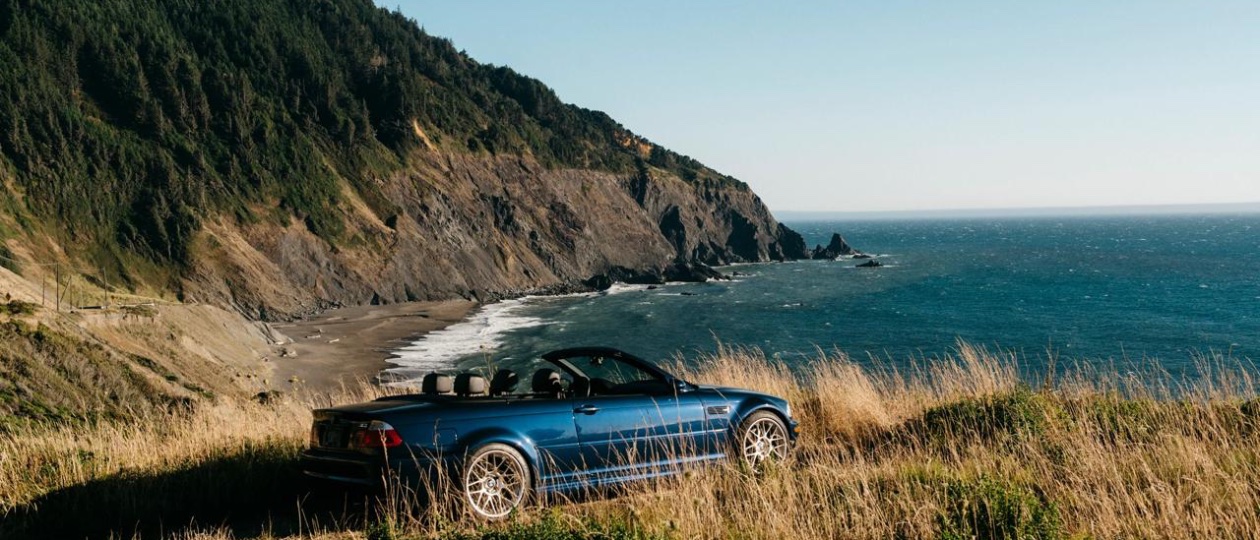
BMW E46 M3 Buyer's Guide: The Sweet Spot of the M3 Lineage
bmw e46-m3 · 2000–2006 · $25,000–$80,000
The BMW E46 M3 is the sweet spot of the M3 lineage -- old enough for hydraulic steering and raw mechanical feedback, new enough for daily drivability, and rare enough in clean condition to become a blue-chip collector car.
History
The E46 M3 arrived in 2000 carrying the weight of expectation that comes with following a legend. The E36 M3 -- particularly the European-spec version with its 3.2-liter S50B32 engine -- had established the M3 as the definitive driver's car of the 1990s. BMW's M division needed to deliver a successor that preserved the E36's razor-sharp dynamics while adding the refinement and presence that a more mature, more affluent buyer base demanded.
They succeeded beyond anyone's reasonable expectations. The S54 engine -- a 3.2-liter naturally aspirated inline-six producing 333 horsepower in US specification -- was the most powerful naturally aspirated straight-six BMW had ever built, and arguably the finest engine in the history of the M3 nameplate. It revved to 8,000 RPM with a willingness that felt almost reckless for a production engine, delivering peak power at 7,900 RPM through a mechanical symphony of individual throttle bodies and variable valve timing.
The S54 was not merely an evolution of the E36 M3's engine. It was a clean-sheet design that drew on BMW's motorsport experience, incorporating a forged crankshaft, forged connecting rods, lightweight pistons, and a double-VANOS system that provided seamless variable valve timing across the entire RPM range. The block was iron to handle the stresses of high-RPM operation, while the head was aluminum to manage heat. Each engine was hand-assembled at BMW Motorsport's facility in Munich, with individual components matched for balance and tolerance.
The chassis was equally impressive. The E46 M3 used a wider track than the standard E46 3 Series, with revised front and rear suspension geometry, unique subframe mounting points, and a sophisticated rear multilink setup that balanced traction and adjustability. The hydraulic power steering system -- the last generation of M3 to use it -- provided the kind of linear, progressive road feel that modern electric systems still struggle to replicate. You could feel every surface change, every shift in grip level, through the steering wheel. In an era where manufacturers were beginning to electronically filter the driving experience, the E46 M3 refused to compromise.
BMW produced the E46 M3 from 2001 through 2006 in North America, building approximately 85,000 units worldwide across coupe and convertible variants. It was offered with a six-speed manual transmission or BMW's SMG II (Sequential Manual Gearbox) automated manual -- the latter was technically faster on paper but is almost universally despised by enthusiasts for its jerky low-speed behavior and inferior engagement. The manual is the only correct choice for an E46 M3 purchase, and the market reflects this with significant price premiums for three-pedal cars.
The E46 M3 competed against the Porsche 911 (996), the Mercedes-Benz C32 AMG, and the Audi S4 -- and beat all of them on the road, the track, and the magazine comparison test. It was named multiple car-of-the-year awards and established a benchmark that its turbocharged successor, the E90/E92 M3 with its V8, never quite matched for enthusiast satisfaction despite being objectively faster.
Variants
Coupe (2001-2006)
The coupe is the canonical E46 M3 -- the version that graced magazine covers, won comparison tests, and defined a generation of driving enthusiasts. The fixed roof provides approximately 10% greater torsional rigidity than the convertible, translating to slightly sharper handling response and a more connected feel over rough surfaces. For track use or spirited driving, the coupe is the clear choice.
The standard coupe included 18-inch wheels (staggered fitment with wider rears), a limited-slip differential, M-specific Bilstein dampers, and a luxurious leather interior with powered seats and BMW's then-advanced navigation system. Colors ranged from conservative (Jet Black, Titanium Silver) to flamboyant (Phoenix Yellow, Laguna Seca Blue -- both command significant premiums today).
Convertible (2001-2006)
The convertible E46 M3 shares the coupe's mechanical specification -- same S54 engine, same transmission options, same suspension. The additional 200 pounds from the convertible top mechanism, structural reinforcement, and associated hardware makes the convertible slightly less dynamic than the coupe. Body flex is perceptible during hard cornering in a way that the coupe simply doesn't exhibit.
That said, the convertible has its own appeal. The combination of 333 horsepower, hydraulic steering, a six-speed manual, and open-air motoring is intoxicating. Convertible E46 M3s trade at a modest discount to coupes -- typically $3,000-$8,000 less for equivalent condition and mileage -- making them an attractive value proposition for buyers who prioritize the top-down experience.
Competition Package (ZCP)
The ZCP (Zubehor Competition Paket) was introduced in 2005 and represents the definitive E46 M3 specification for driving enthusiasts. The package added 19-inch forged wheels (reduced unsprung mass by approximately 11 pounds per corner), stiffer springs and dampers, a more aggressive rear differential ratio, a shorter shift lever for quicker throws, and alcantara steering wheel and shift knob surfaces.
The handling difference between a standard E46 M3 and a ZCP car is immediately perceptible. The ZCP car turns in more sharply, maintains composure over mid-corner bumps better, and communicates grip levels more precisely through the steering. The trade-off is a noticeably firmer ride that some drivers find harsh on rough urban roads. For canyon carving, track days, or simply enthusiastic driving, the ZCP is the version to buy.
ZCP cars command a consistent $5,000-$10,000 premium over standard coupes in equivalent condition. Given the hardware included, this is arguably the best value upgrade in the E46 M3 lineup.
CSL (2003, Euro-Market)
The E46 M3 CSL (Coupe Sport Leichtbau -- Coupe Sport Lightweight) is the ultimate expression of the E46 M3 platform and one of the most desirable BMW M cars ever produced. Never officially sold in North America, the CSL was a homologation-inspired lightweight special that deleted the air conditioning, power seats, and sound insulation while adding a carbon fiber roof panel, lightweight glass, and a revised S54 engine producing 355 horsepower through larger intake runners and a more aggressive cam profile.
Only 1,383 CSLs were produced, and clean examples now command $150,000-$250,000+ at auction. The CSL is beyond the scope of most buyers' budgets, but its existence establishes the E46 M3 platform's upper ceiling and validates the car's credentials as a future collector piece.
Common Issues
The E46 M3 has three known failure points that every prospective buyer must understand. Two of them are inconvenient and expensive. One of them is potentially catastrophic. Here's the hierarchy.
Subframe Cracking (Critical)
This is the single most important issue on any E46 M3 inspection. The rear subframe mounts are welded to relatively thin sheet metal in the trunk floor. Under sustained high loads -- hard launches, aggressive track driving, or simply the cumulative stress of 100,000+ miles -- the sheet metal can crack around the mounting points. If left unaddressed, the cracks propagate until the subframe can shift in the chassis, catastrophically altering the rear suspension geometry.
Every E46 M3 will eventually develop some degree of subframe stress. The question is whether it's been addressed proactively. A preventive reinforcement -- welding reinforcement plates to the trunk floor around the mounting points -- costs $1,500-$3,000 and is considered mandatory maintenance, not optional repair. If you buy an E46 M3 and it hasn't been reinforced, do it immediately. Do not wait for cracks to appear.
The E39 M5 shares a similar but less severe version of this issue. It's a function of BMW's chassis engineering priorities in this era -- the trunk floor was optimized for weight savings rather than the sustained loads that M car owners impose.
Inspection is straightforward: pop the trunk, remove the floor panel, and visually inspect the sheet metal around the four subframe mounting bolts. Any cracking, distortion, or evidence of previous welding repair should be evaluated by a specialist before purchase.
Rod Bearing Wear (Serious)
The S54 engine's rod bearings have a documented tendency to wear prematurely, particularly on engines that have experienced extended oil change intervals, oil starvation during hard cornering, or simple age-related degradation. The bearing wear can progress from imperceptible to engine-destroying over a relatively short window, making proactive inspection and replacement the only safe approach.
Symptoms of advancing rod bearing wear include a faint ticking noise at idle that varies with engine temperature, a metallic shimmer in the oil visible when draining into a clean pan, and in late stages, a rod knock under load. An oil analysis (Blackstone Labs or equivalent) can detect elevated copper and lead levels that indicate bearing material is wearing into the oil -- this is the cheapest and most reliable early warning system.
Preventive rod bearing replacement costs $2,500-$4,000 at a specialist shop and involves dropping the oil pan and replacing all six bearings. Given the S54's $15,000-$25,000 replacement cost, this is cheap insurance.
VANOS System Deterioration
Like the E39 M5's S62, the S54's double-VANOS system uses seals that degrade with age and heat cycling. Symptoms include rough idle, reduced throttle response, a "hunting" idle that oscillates between 500 and 900 RPM, and eventually check engine lights for VANOS-related fault codes.
VANOS rebuild kits are widely available and a competent BMW specialist can reseal the units in 3-5 hours. Budget $600-$1,200 for a professional rebuild. Like rod bearings, this is a "when, not if" maintenance item. Factor it into your purchase budget.
Rear Window Regulator Failure
The rear side windows on the E46 M3 coupe use cable-driven regulators that are prone to failure. The cables stretch and eventually snap, leaving the window stuck in whatever position it was last in. Replacement regulators are inexpensive ($50-$100 for aftermarket), but the installation involves removing the door panel and requires moderate mechanical skill.
SMG Hydraulic Pump Failure
If you're looking at an SMG-equipped E46 M3 (which we'd strongly advise against), the electrohydraulic pump and its associated accumulator are known failure points. The pump runs continuously when the car is in gear, and the accumulator loses its nitrogen charge over time. Replacement costs $2,000-$3,500. This is one of several reasons why manual-transmission E46 M3s command a $10,000-$15,000 premium over SMG cars.
Pricing Analysis
The E46 M3 market has bifurcated sharply along the manual/SMG divide, with six-speed manual cars appreciating aggressively while SMG examples remain comparatively stagnant. This divide has widened every year since 2020 and shows no signs of narrowing.
Current Market Ranges (2026) -- Six-Speed Manual
- Project/high-mileage (130,000+ miles): $22,000-$30,000
- Driver-quality (70,000-120,000 miles): $32,000-$48,000
- Excellent condition (under 60,000 miles): $50,000-$72,000
- ZCP in excellent condition: $58,000-$82,000
- Exceptional/collector (under 30,000 miles, desirable spec): $80,000-$110,000+
- Desirable color premiums: Phoenix Yellow (+$8,000-$15,000), Laguna Seca Blue (+$10,000-$20,000)
SMG Pricing
SMG cars trade at a consistent $10,000-$15,000 discount to equivalent manual examples. This gap has widened over time and represents either a significant cost savings (if you plan to convert to manual, a common and well-documented swap) or a warning about future resale value.
Market Trajectory
The E46 M3 is on a similar appreciation trajectory to the Honda S2000 -- both are analog-era sports cars with fixed supply and growing demand from enthusiasts who value mechanical connection over electronic performance. Bring a Trailer average selling prices have increased 12-18% annually since 2021, with exceptional examples regularly setting new records.
The E46 M3's investment case rests on three pillars: it was the last hydraulic-steering M3, it was the last naturally aspirated inline-six M3, and it offered a manual transmission without compromise. Every subsequent M3 generation has added power while subtracting the analog connection that made the E46 special. As the enthusiast market increasingly prizes this connection, the E46 M3's values will continue to climb.
Inspection Checklist
The Big Three (Check These First)
- Subframe mounting points: Remove the trunk floor panel. Inspect all four mounting bolt areas for cracks, stress marks, or reinforcement evidence. This is non-negotiable.
- Oil analysis: Request a recent oil analysis report showing copper and lead levels. If none exists, negotiate the cost of one ($30) and an oil change into the purchase.
- VANOS operation: Drive through the full RPM range. Listen for rough idle, feel for hesitation or flat spots. These are the three items that determine whether an E46 M3 is a sound purchase or a financial trap.
Exterior
- Rust: Check rear wheel arches, jack points, battery tray area, and lower door edges. The E46 M3 is generally well-protected but not immune, especially in salt-state cars.
- Panel gaps: Consistent, tight gaps are the hallmark of an unaccident-ed E46 M3. Any deviation warrants a PPI from a body specialist.
- M-specific trim: Verify the M3-specific fenders (with vents), front and rear bumpers, mirror caps, and side skirts are present and undamaged. Replacement M3 body panels are expensive.
Drivetrain
- Cold start behavior: The S54 should start immediately and idle smoothly. Count to 30 -- any idle hunting or roughness in that window points to VANOS issues.
- Rod bearing listen: At operating temperature, at idle, open the oil cap and listen at the valve cover. Any deep ticking or knocking that varies with RPM is a rod bearing concern. Also listen from beneath the car near the oil pan.
- Transmission shifts: Row through all six gears at moderate RPM. Every engagement should be clean and direct. Second gear is typically the first synchro to show wear -- any resistance or grinding here indicates transmission maintenance is overdue.
- Clutch health: The clutch should engage smoothly within a consistent range. A very high engagement point suggests significant clutch wear. Budget $1,800-$2,800 for a clutch and flywheel replacement.
- Differential operation: Drive in a tight circle at low speed with the windows down. Clicking, binding, or significant understeer indicates limited-slip differential wear.
Interior
- Seat bolster wear: The driver's seat outer bolster is the first interior surface to show wear on any E46 M3. Significant cracking or leather separation here indicates high usage.
- Dashboard pixel fade: The instrument cluster and radio displays commonly develop pixel failure. While not mechanically significant, it's a negotiation point and a $200-$400 fix.
Maintenance Guide
The E46 M3 rewards meticulous maintenance with exceptional reliability and performance. Neglect it, and you'll face repair bills that make the car's purchase price look like a down payment. The S54 is a hand-built race-derived engine -- treat it accordingly.
Engine Oil -- The Most Important Item
Use BMW-approved 10W-60 oil (Castrol TWS or equivalent) and change it every 5,000 miles without exception. The S54's high-RPM operation, tight tolerances, and the rod bearing sensitivity described above make oil quality and freshness the single most important factor in engine longevity. Do not trust BMW's extended oil change interval from the era -- 15,000-mile oil changes are engine abuse on an S54.
Send every other oil change sample to Blackstone Labs or a similar oil analysis service. The $30 cost provides an early warning system for rod bearing wear, cooling system contamination, and other developing issues that are far cheaper to address proactively.
VANOS Reseal
Budget for a VANOS reseal at purchase or within the first 10,000 miles of ownership. Fresh VANOS seals restore throttle response, idle stability, and low-end torque. This is a transformative maintenance item -- many owners report that their "tired-feeling" M3 was simply running on degraded VANOS seals.
Rod Bearings
If your oil analysis shows elevated copper and lead, or if the engine has more than 80,000 miles and the bearings have never been inspected, schedule a preventive replacement. The $3,000-$4,000 cost is the single best investment you can make in an S54's future. Some owners replace bearings preventively at purchase regardless of mileage -- this is not unreasonable given the failure consequences.
Subframe Reinforcement
If not already done, reinforce the rear subframe mounting points. This is structural maintenance that prevents a failure mode capable of writing off the entire car. Get it done. Do not defer it.
Cooling System
Same philosophy as the E39 M5: replace the expansion tank, water pump, thermostat, and all coolant hoses proactively. BMW's plastic cooling system components of this era are ticking time bombs after 15+ years. Budget $500-$800 in parts and 4-6 hours of labor.
Differential and Transmission Fluids
Change rear differential fluid (75W-90 synthetic) and manual transmission fluid (Redline MTL or BMW MTF-LT-2) every 30,000 miles. Fresh fluids maintain the limited-slip differential's behavior and improve shift quality noticeably.
Suspension
The M3-specific dampers, springs, and bushings have a finite lifespan. At 80,000-100,000 miles, a suspension refresh with quality components restores the car's legendary balance and response. Budget $2,000-$3,500 for a comprehensive refresh including dampers, control arm bushings, and sway bar end links.
Insurance
The E46 M3's collectible trajectory makes specialty insurance mandatory. Standard carriers will offer actual cash value policies that might pay $15,000 for a car worth $50,000+ in the current market. That gap is not just unfair -- it's financially devastating in a total loss scenario.
Hagerty
Hagerty is the preferred insurer for most E46 M3 owners. Their valuations reflect the current collector market, and their agreed-value policies eliminate the depreciation-based calculations that standard carriers use. Expect premiums of $900-$1,800 per year for an agreed value in the $40,000-$70,000 range. Hagerty's claims process for collector cars is also significantly better than standard carriers -- they understand that an E46 M3 cannot simply be replaced with a check for Blue Book value.
American Collectors
American Collectors offers competitive rates with more flexible daily driver provisions than Hagerty. If you use your E46 M3 as a regular driver rather than a weekend-only collector car, American Collectors may offer a better policy structure.
Insurance Strategy
Review your agreed value annually -- the E46 M3 market is moving quickly enough that last year's valuation may be thousands of dollars below current market value. If you've completed significant maintenance (rod bearings, VANOS, subframe reinforcement), document it thoroughly -- this maintenance history enhances the car's insurable value and supports a higher agreed-value figure.
For E46 M3 CSL owners, Hagerty is essentially the only option. The rarity and value of these cars ($150,000-$250,000+) requires a specialty insurer with experience in high-value collector vehicles.
One consideration specific to the E46 M3 is track day coverage. These cars are exceptionally popular at high-performance driving events, and most agreed-value policies exclude damage sustained during any form of competitive or organized track activity. If you plan to track your M3 -- and the car practically begs you to -- confirm your policy's stance on HPDEs before your first session and consider a track day endorsement if available.
Documentation of completed maintenance also strengthens your insurance position. An E46 M3 with documented rod bearing replacement, subframe reinforcement, and VANOS reseal is a demonstrably better risk than one with unknown service history. Provide your insurer with this documentation when establishing your agreed value -- it supports a higher figure and makes the claims process smoother if you ever need it.
Insure Your e46-m3
Agreed-value policies are essential for appreciating classics. Lock in today's value before the market moves.
Find Your e46-m3
Browse current listings and recently sold examples to find the right one at the right price.
Parts & Maintenance
Keep your e46-m3 running strong with OEM and quality aftermarket parts.
Recommended Tools
Our curated list of tools for e46-m3 owners -- from basic maintenance to weekend wrenching.
Need advice on this car?
Chat with us on WhatsApp — get the Pre-Purchase Inspection Checklist, ask about pricing, or tell us about yours.
Chat with us on WhatsAppRecent Auction Activity
- Auction Watch: Week 12, 2026March 16, 2026
- Auction Watch: Week of March 15, 2026March 15, 2026
- Auction Watch: Week 10, 2026March 2, 2026