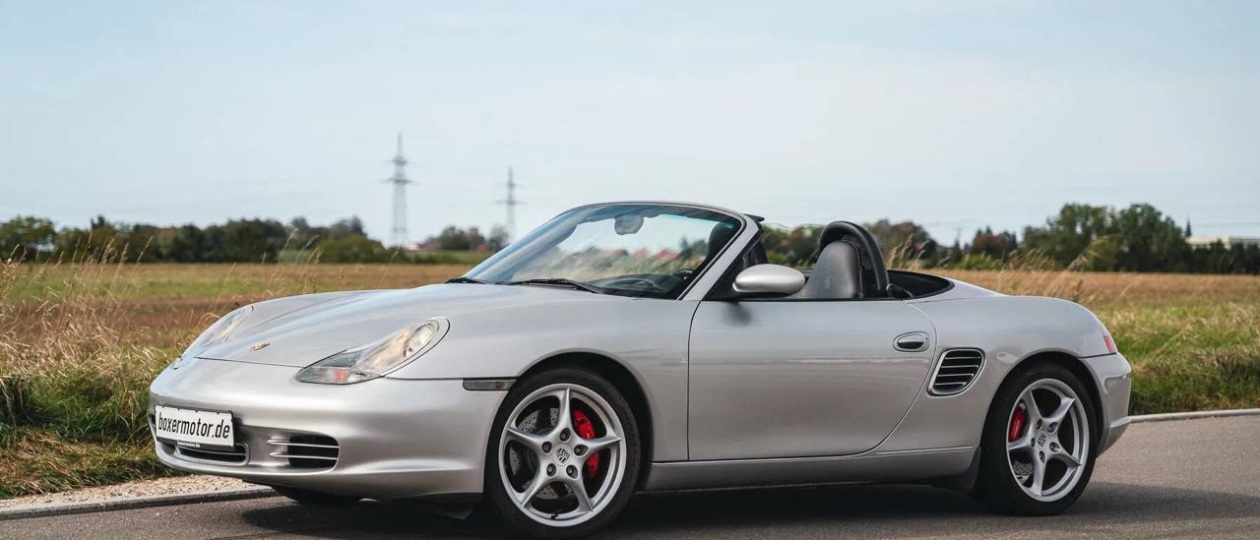
Porsche Boxster S 986 Buyer's Guide: The Most Undervalued Porsche on the Market
porsche boxster-s-986 · 2000–2004 · $12,000–$35,000
The Porsche Boxster S 986 is the most undervalued Porsche on the market -- a mid-engine masterclass dismissed only because of badge snobbery, with driving dynamics that embarrass 911s costing three times as much.
History
The Porsche Boxster arrived in 1996 carrying the weight of saving a company from financial ruin, and it succeeded so thoroughly that Porsche's enthusiast community has never quite forgiven it. The 986-generation Boxster was the car that rescued Porsche from near-bankruptcy in the mid-1990s -- a period when the company was hemorrhaging money, the 911 was aging, and serious discussions about selling to Toyota or Volkswagen were taking place in Stuttgart boardrooms. The Boxster was designed to be built affordably, to sell in volume, and to fund the development of the next-generation 996 911. It accomplished all three objectives, and in doing so it became the most important Porsche produced since the original 911.
The Boxster S arrived for the 2000 model year as the higher-performance variant, equipped with a 3.2-liter version of the M96 flat-six engine producing 250 horsepower -- a meaningful jump from the base Boxster's 2.7-liter, 217-horsepower unit. The S also received larger brakes borrowed from the 996 911, a revised suspension with stiffer springs and dampers, and 17-inch wheels as standard (later 18-inch). Visually, the S was distinguished by its red-painted brake calipers, dual exhaust tips, and "S" badging -- subtle differences that most non-enthusiasts would never notice.
What Porsche created with the Boxster S was, objectively, one of the finest driver's cars of the early 2000s. The mid-engine layout positioned the flat-six just behind the cockpit and ahead of the rear axle, delivering a nearly ideal 46/54 front-to-rear weight distribution that no front-engine sports car could replicate. The resulting handling balance was exceptional -- the car rotated with precision, communicated road texture through the steering column with the clarity of a seismograph, and transitioned from understeer to neutral to gentle oversteer with a predictability that inspired confidence and rewarded practice.
The tragedy of the Boxster S is that its excellence was obscured by its own success. Because Porsche needed the Boxster to sell in volume, the 986 was positioned as the "entry-level Porsche" -- and in the Porsche world, entry-level is a scarlet letter. 911 owners looked down on Boxster drivers. Car magazine comparisons inevitably framed the Boxster as "the one you buy when you can't afford the real thing." Internet forums were brutal. The fact that the Boxster S shared its headlights with the 996 911 -- a design choice driven by manufacturing economics -- only reinforced the perception that it was a lesser car, a parts-bin special cobbled together from 911 leftovers.
This narrative was wrong then, and it's even more wrong now. The Boxster S, with its mid-engine layout, is arguably the better driver's car than the contemporary 996 911. It's more balanced at the limit, more communicative through corners, and substantially lighter. The 996 911 has its own charms -- more power, the 911 mystique, rear-seat "practicality" -- but on a twisty mountain road, the Boxster S is the car you want to be driving. This opinion is shared by virtually every professional journalist and racing driver who has driven both cars back-to-back, yet the market continues to price the Boxster S at a fraction of 911 values.
The 986 generation ran through 2004 before being replaced by the 987 Boxster. During its production run, the Boxster family -- including the base model and the S -- sold over 160,000 units worldwide, generating the revenue that funded the Cayenne SUV program, the 997 911 development, and ultimately the modern Porsche empire. Every Porsche GT3, every Taycan, every Cayenne Turbo GT exists in part because the Boxster sold in sufficient volume to keep the lights on in Zuffenhausen during Porsche's darkest decade.
The Porsche 944 Turbo tells a remarkably similar story -- another transaxle Porsche that was dismissed as "not a real Porsche" during its production run and has since been recognized as one of the brand's finest driver's cars. The 944 Turbo's recent price appreciation suggests the Boxster S may follow a similar trajectory once the market overcomes its badge bias.
Variants
Boxster S (2000-2004)
The standard Boxster S is the variant that defines the 986 experience. The 3.2-liter M96/21 flat-six engine was mechanically similar to the unit in the 996 Carrera but with different cylinder bore spacing and a unique crankcase. The engine revved to a 6,600 RPM redline and delivered its 250 horsepower with a flat, linear power curve -- no turbo lag, no peaky VTEC crossover, just a steady, insistent pull from 3,000 RPM to the limiter accompanied by the distinctive flat-six wail that Porsche has spent seven decades perfecting.
The suspension was a strut-type front and multi-link rear configuration -- the same basic geometry as the 996 911 but tuned for the Boxster's lighter weight and mid-engine balance. The S received stiffer springs, firmer dampers, and larger anti-roll bars compared to the base Boxster, creating a car that was composed and controlled through fast corners without being punishingly stiff on rough roads. The ride quality was genuinely excellent for a sports car -- firm enough to feel connected but compliant enough for daily driving.
Model year changes were incremental but noteworthy. The 2003 and 2004 models received a glass rear window in the convertible top (replacing the plastic unit that scratched and clouded), revised interior materials, and updated electronics. The 2004 model year also saw a slight increase in standard equipment.
550 Spyder Anniversary Edition (2004)
The 550 Spyder Anniversary Edition was a limited-production variant celebrating the 50th anniversary of the Porsche 550 Spyder -- the legendary race car that James Dean was driving when he was killed in 1955. Porsche produced approximately 1,953 examples worldwide (the number referencing the year of the original 550's debut), each finished in GT Silver Metallic with a special cocoa-brown leather interior, commemorative badging, and 18-inch Carrera GT-design wheels.
Mechanically, the 550 Spyder was identical to the standard Boxster S, with the same 250-horsepower engine, suspension, and brakes. The appeal was entirely about exclusivity and the historical connection. These cars are beginning to attract collector interest, and clean examples with low mileage are commanding premiums over standard Boxster S models -- a trend that will likely intensify as the 986 generation enters the collector car mainstream.
Common Issues
IMS Bearing Failure
The IMS (Intermediate Shaft) bearing is the elephant in every M96 engine room, and no Boxster S buyer's guide would be complete without addressing it thoroughly. The intermediate shaft in the M96 engine drives the camshaft chains, and it's supported by a sealed ball bearing that, in some engines, can fail catastrophically -- losing lubrication, disintegrating, and sending metal debris through the engine with terminal consequences.
Here's what you actually need to know, stripped of the internet hysteria: the IMS bearing failure rate is estimated at 2-5% of all M96 engines produced. That's real and non-trivial, but it's not the 50% failure rate that forum posts might lead you to believe. The single-row bearing used in 2000-2005 engines is more failure-prone than the dual-row bearing used in 1997-1999 production. The 2006+ 987 generation used a non-replaceable bearing with a different design that has a lower failure rate.
The good news: preventive IMS bearing replacement is a well-understood procedure. Companies like LN Engineering and Flat 6 Innovations manufacture upgraded replacement bearings that eliminate the failure mode entirely. The cost of a preventive IMS bearing replacement is $1,500-$2,500 at a specialist shop -- expensive, yes, but a fraction of the $8,000-$15,000 cost of a full engine rebuild or replacement after a catastrophic failure.
The smart play: when shopping for a Boxster S, check whether the IMS bearing has been replaced with an upgraded unit. If it has, that's one major concern eliminated. If it hasn't, factor the replacement cost into your purchase price. An unreplaced IMS bearing is a negotiation lever, not a walk-away issue.
RMS (Rear Main Seal) Leak
The M96 engine is prone to rear main seal leaks, which present as oil accumulating on the bottom of the engine and transmission bellhousing. A rear main seal replacement requires removing the transmission and flywheel, making it a labor-intensive job that typically runs $1,500-$2,000 at an independent shop. Like the IMS bearing, the RMS leak is a known issue with a known fix -- it's a cost to factor in, not a reason to avoid the car.
Bore Scoring
Some M96 engines develop scoring in the cylinder bores, causing oil consumption, rough running, and eventual power loss. The exact cause is debated -- theories include cylinder liner flexion, localized hot spots, and inadequate oil flow -- but the result is the same: scored bores require either re-sleeving the engine (a $5,000-$8,000 job) or a replacement engine. During a pre-purchase inspection, request a borescope examination of the cylinder bores. This is a $200-$300 diagnostic that can save you thousands.
Convertible Top Mechanism
The 986's power-operated convertible top is generally reliable, but the hydraulic cylinders and associated lines can develop leaks as they age. A complete top mechanism rebuild can run $1,000-$2,000. More commonly, the plastic rear window (pre-2003 models) clouds and cracks, requiring a new top -- budget $1,500-$3,000 for a quality replacement with installation.
AOS (Air/Oil Separator) Failure
The air/oil separator is a crankcase ventilation component that separates oil mist from blow-by gases before they're recirculated into the intake. When the AOS fails, oil enters the intake manifold, causing smoke, rough idle, and fouled spark plugs. The replacement part is inexpensive ($100-$200), but the labor to access it is significant due to its location -- budget $500-$800 total for parts and labor at an independent shop.
Window Regulator Failure
The 986's window regulators are a known weak point. The plastic guides and cable mechanisms fail with depressing regularity, usually leaving the window stuck in the down position -- not ideal in a convertible. Replacement regulators are available for $100-$200 per side, and the job is manageable for a competent DIYer. Replace both sides when one fails -- the other is on borrowed time.
Pricing Analysis
The Boxster S 986 represents one of the most compelling value propositions in the used sports car market, and the pricing reflects it -- for now. These cars are still genuinely affordable, but the early signs of collector market interest are appearing.
Current Market Ranges (2026)
Standard Boxster S (2000-2004):
- Project/high-mileage (120,000+ miles): $10,000-$15,000
- Driver-quality (60,000-100,000 miles): $16,000-$24,000
- Excellent condition (under 50,000 miles): $25,000-$32,000
- Museum-quality (under 20,000 miles): $33,000-$42,000
550 Spyder Anniversary Edition (2004):
- Driver-quality: $22,000-$30,000
- Excellent condition: $32,000-$45,000
Market Trajectory
The Boxster S market is at an inflection point. For years, these cars depreciated like any other used convertible -- steadily and relentlessly. A 2002 Boxster S that cost $52,000 new could be had for $8,000-$12,000 in 2018. That floor has been reached and the trend is reversing.
Several factors are driving the shift. The broader Porsche market has seen dramatic appreciation across nearly every model line -- the Porsche 944 Turbo has roughly doubled in value since 2019, and the 993 911 has become a six-figure car. As the "halo" models become unaffordable, buyers are looking downmarket and discovering that the Boxster S offers comparable driving dynamics at a fraction of the price.
The mid-engine layout is also becoming a value differentiator as the market matures. Young enthusiasts who grew up playing Gran Turismo and Forza understand that mid-engine equals superior handling, and they're less burdened by the badge snobbery that kept Boxster prices suppressed for two decades. The BMW E46 M3 attracts a similar buyer demographic -- enthusiasts who prioritize driving experience over brand prestige.
The IMS bearing narrative is also evolving from a scare story into a known-quantity maintenance item. As more Boxster S cars receive upgraded IMS bearings, the fear factor diminishes and the cars become more attractive to buyers who previously avoided them. A Boxster S with a documented IMS bearing replacement is a car with one of its biggest risk factors eliminated.
Inspection Checklist
A thorough pre-purchase inspection is absolutely critical for any Boxster S purchase. The M96 engine's known issues make a comprehensive mechanical evaluation non-negotiable.
Engine
- Oil leaks: Check the RMS area (bottom of engine/transmission junction), valve cover gaskets, and oil cooler lines. Some seepage is normal on a high-mileage M96 -- active dripping is not.
- Borescope inspection: Request a borescope of the cylinder bores. This is the single most important diagnostic for any M96 engine purchase. Look for scoring, discoloration, and uneven wear patterns.
- IMS bearing status: Ask for documentation of IMS bearing replacement. If the bearing hasn't been replaced, listen for bearing noise -- a subtle metallic rattle or ticking from the engine's bottom end, particularly at idle and low RPM.
- Cold start behavior: The M96 should start immediately and idle smoothly. Rough idle, blue smoke, or excessive crankcase pressure (oil cap blowing off or excessive vapor from the oil filler) indicates internal issues.
- Oil consumption: Ask the owner about oil consumption between changes. An M96 that consumes more than one quart per 3,000 miles warrants further investigation -- bore scoring or failed AOS are the usual culprits.
Drivetrain
- Clutch engagement: The clutch should engage smoothly in a predictable range. A very high engagement point or shuddering indicates a worn clutch -- budget $1,500-$2,500 for replacement.
- Transmission feel: All five gears (or six, on manual models with the optional Tiptronic) should engage cleanly. Second gear balking is the most common synchro issue.
- Differential noise: With the car on a lift, rotate the rear wheels and listen for bearing noise or grinding from the transaxle.
Exterior and Interior
- Convertible top operation: Operate the top through its full cycle at least twice. It should move smoothly without hesitation, groaning, or incomplete latching.
- Window operation: Test both power windows. Slow or stalling operation indicates worn regulators.
- Rear window clarity: On pre-2003 models, check the plastic rear window for cloudiness, cracks, and separation from the top material.
- Paint condition: Check the front bumper, hood, and rocker panels for stone chips. The mid-engine layout means the front trunk (frunk) and nose take the brunt of road debris.
Maintenance Guide
The Boxster S rewards meticulous maintenance with reliable, engaging performance. The M96 engine's reputation for catastrophic failures has overshadowed its fundamental durability -- when properly maintained, these engines routinely exceed 150,000 miles without major issues. The key is not to defer maintenance items that cost hundreds of dollars now but thousands later.
Engine Oil
Use a Porsche-approved 0W-40 or 5W-40 full synthetic oil and change it every 5,000 miles or annually, whichever comes first. The M96 engine does not tolerate extended oil change intervals -- the flat-six architecture means oil drains away from critical bearing surfaces when the car sits, and degraded oil accelerates the bore scoring condition. Keep the oil level at the upper mark on the dipstick. Oil starvation during hard cornering is a real concern in a mid-engine car -- even more so than in the front-engine BMW E46 M3, where the oil pan is designed for sustained lateral loads.
IMS Bearing
If the IMS bearing has not been replaced with an upgraded unit, budget for this service immediately after purchase. The LN Engineering single-row bearing replacement or Flat 6 Innovations ceramic hybrid bearing eliminates the failure mode. This service is typically combined with a clutch replacement or RMS seal to reduce overall labor costs since the transmission must be removed for all three procedures. A comprehensive "peace of mind" service -- IMS bearing, RMS seal, clutch, and AOS -- runs $3,500-$5,000 and addresses every major M96 known issue in one visit.
Coolant System
The Boxster S uses an expansion tank-style cooling system with coolant that should be replaced every 40,000 miles or 4 years. The coolant pipes that run along the underside of the car are steel and will corrode over time, particularly in salt-belt climates. Inspect these pipes during every service and replace them proactively at the first sign of corrosion -- a burst coolant pipe at highway speed can overheat the engine before you realize what's happening.
Brake System
The Boxster S's 996-derived brakes are excellent but need periodic attention. Replace brake fluid every 2 years with a DOT 4 specification fluid. Front brake pads and rotors will wear faster than rears due to weight transfer dynamics during braking -- expect to replace fronts every 25,000-35,000 miles and rears every 40,000-50,000 miles. The red-painted Brembo calipers should be inspected for piston seal condition and rebuilt if they're sticking -- a rebuild kit is $50-$100 per caliper.
Convertible Top Care
Treat the fabric convertible top with a UV protectant twice per year and keep it clean. The plastic rear window (pre-2003) should be cleaned only with a plastic-specific cleaner -- never glass cleaner, which will cloud it further. When the car is stored, leave the top up and latched to maintain the shape of the fabric and mechanism. A well-maintained Boxster top lasts 8-10 years. A neglected one lasts 4.
Suspension
The Boxster S uses standard rubber bushings that deteriorate over time. At 80,000-100,000 miles, expect to replace the front and rear control arm bushings. The factory alignment specifications should be checked annually -- the mid-engine layout makes the Boxster sensitive to alignment changes, and worn bushings can allow the geometry to shift enough to cause uneven tire wear and degraded handling.
Insurance
The Boxster S 986 occupies an interesting insurance position: it's cheap enough that standard insurance covers its replacement value adequately for now, but it's appreciating fast enough that specialty coverage will become necessary within the next few years.
Hagerty
Hagerty offers agreed-value policies for the Boxster S, though the relatively low values mean premiums are quite affordable -- typically $500-$900 per year for a $20,000-$30,000 agreed value. This is arguably the best deal in Hagerty's catalog: real Porsche performance with mid-engine handling, covered by the industry's gold-standard collector car insurer, for less per year than comprehensive coverage on a new Honda Civic.
American Collectors
American Collectors is an excellent alternative for Boxster S owners who use their cars regularly. Their daily-driver-friendly policies don't impose the strict mileage restrictions that some Hagerty policies require, making them a better fit for owners who use their Boxster S as intended -- as a car to be driven, not stored.
Insurance Strategy
For Boxster S owners, the insurance strategy depends on current value and usage pattern. If your car is worth under $20,000 and you drive it regularly, a standard comprehensive policy may still provide adequate replacement value. Once values cross the $25,000 threshold -- and they're getting there -- an agreed-value policy becomes essential.
The smart long-term play is to lock in an agreed-value policy now, while premiums are low. As the Boxster S appreciates -- and the Porsche 944 Turbo's trajectory strongly suggests it will -- your agreed value can be adjusted upward annually. Starting with an agreed-value policy early establishes a relationship with the insurer and creates a documentation trail of your car's value history that will be useful if you ever need to file a claim.
Track day coverage follows the same pattern as other collector cars: most policies exclude competitive events, and HPDE endorsements are available for an additional premium. Given the Boxster S's exceptional track manners -- the mid-engine balance makes it one of the most approachable and rewarding track day cars at any price point -- this endorsement is worth the investment.
Insure Your boxster-s-986
Agreed-value policies are essential for appreciating classics. Lock in today's value before the market moves.
Find Your boxster-s-986
Browse current listings and recently sold examples to find the right one at the right price.
Parts & Maintenance
Keep your boxster-s-986 running strong with OEM and quality aftermarket parts.
Recommended Tools
Our curated list of tools for boxster-s-986 owners -- from basic maintenance to weekend wrenching.
Need advice on this car?
Chat with us on WhatsApp — get the Pre-Purchase Inspection Checklist, ask about pricing, or tell us about yours.
Chat with us on WhatsAppRecent Auction Activity
- Auction Watch: Week 11, 2026March 9, 2026
- Auction Watch: Week 10, 2026March 2, 2026