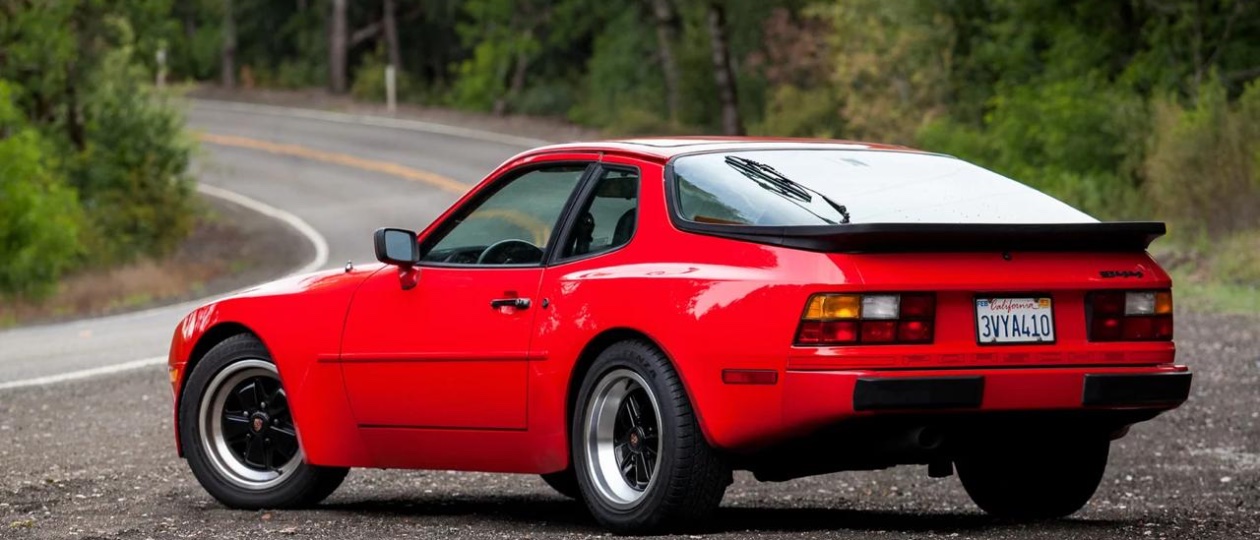
Porsche 944 Turbo Buyer's Guide: The Porsche They Don't Want You to Know About
porsche 944-turbo · 1985–1991 · $25,000–$65,000
The Porsche 944 Turbo is the best entry into serious Porsche ownership -- a genuine driver's car with racing DNA that has been criminally undervalued by the 911-obsessed market, making it the smartest Porsche investment under $50,000.
History
The Porsche 944 Turbo was never supposed to be this good. When Porsche introduced the 944 in 1982 as a replacement for the aging 924, it was positioned as the affordable, front-engined Porsche -- the car for people who couldn't quite afford a 911. The automotive press was skeptical. Porsche purists were dismissive. But when the turbocharged variant arrived in 1985, carrying the internal designation 951, it silenced every critic with a car that matched or exceeded the contemporary 911 Carrera in nearly every measurable performance metric.
The 944 Turbo's story begins with the 2.5-liter inline-four engine that Porsche developed from the right bank of the 928's V8. This wasn't a cynical parts-bin exercise -- Porsche engineers reworked the engine with a KKK K26 turbocharger, an air-to-air intercooler, Bosch Motronic engine management, and forged internals that could handle boost pressures well beyond the factory 0.75 bar setting. The result was 220 horsepower in US specification -- modest by today's standards but extraordinary for a 2.5-liter four-cylinder in 1985. More importantly, the power delivery was remarkably linear for a turbocharged engine of its era, with none of the violent on-off boost characteristics that plagued contemporary forced induction cars.
What made the 944 Turbo truly exceptional was Porsche's obsession with chassis balance. The transaxle layout -- engine at the front, transmission at the rear -- gave the 944 Turbo near-perfect 50.7/49.3 weight distribution. The suspension was a sophisticated design with upper and lower A-arms at the front and semi-trailing arms at the rear, all tuned by Porsche's motorsport engineers who were simultaneously developing the 944 Turbo Cup race series. This wasn't a luxury GT with a turbo bolted on -- it was a racing platform that happened to have air conditioning and a Blaupunkt stereo.
On the racetrack, the 944 Turbo proved its engineering credentials conclusively. The 944 Turbo Cup series ran from 1986 to 1990 as a one-make support race for Formula One grands prix, producing some of the closest racing in motorsport. The fact that Porsche chose the 944 Turbo rather than the 911 for this high-profile racing series spoke volumes about which car the engineers considered the better chassis. Drivers who raced both consistently reported that the 944 Turbo was more balanced, more predictable, and ultimately faster on tight circuits where the 911's rear-engine weight bias became a liability.
The 944 Turbo's production run coincided with a transformative period for Porsche. The company was struggling financially in the late 1980s, and the front-engined models -- the 924, 944, and 968 -- were supposed to democratize the brand and generate the volume sales that the 911 couldn't provide. The strategy partially worked: the 944 became Porsche's best-selling model line, and the Turbo variant served as the aspirational apex of the range. But when Porsche's financial situation stabilized in the early 1990s, the company retreated to its 911-centric identity, and the front-engined cars were quietly discontinued. The 944 Turbo's spiritual successor wouldn't arrive until the Porsche Boxster S 986 launched in 2000 -- another "entry-level" Porsche that Porsche fans underestimated and the market eventually embraced.
Total production of the 944 Turbo across all variants was approximately 25,000 units -- a substantial number by Porsche standards but tiny compared to the millions of 911s produced over the decades. Of those 25,000, attrition from accidents, deferred maintenance, and parts-car dismantling has reduced the surviving population significantly. Finding a clean, well-maintained example requires patience and diligence.
Variants
944 Turbo (1985-1989)
The standard 944 Turbo is the car that established the platform's reputation. The 1985-1986 models produced 220 horsepower in US trim (250 PS in European specification) and featured the first-generation KKK K26 turbocharger with a wastegate-controlled boost system. These early cars are distinguished by their phone-dial alloy wheels, pop-up headlights, and a dashboard layout borrowed from the naturally aspirated 944 with the addition of a boost gauge.
The 1987 model year brought significant upgrades: revised ECU mapping, improved intercooler efficiency, and structural reinforcements that addressed some early production quality concerns. The 1988-1989 models received further refinements including revised damper valving and a slightly stiffer rear anti-roll bar that improved high-speed stability.
Performance figures tell the story: 0-60 mph in approximately 5.9 seconds, quarter-mile in 14.1 seconds, and a top speed of 157 mph. These numbers matched the contemporary 911 Carrera 3.2 -- a car that cost roughly 40% more.
944 Turbo S (1988)
The Turbo S is the definitive 944 and one of the most capable sports cars of the 1980s. Limited to approximately 1,635 units worldwide (with only around 700 US-specification examples), the Turbo S received a comprehensive performance upgrade package that transformed the already excellent Turbo into something genuinely special.
Engine output jumped to 250 horsepower through a larger turbocharger, higher boost pressure (1.0 bar vs 0.75 bar), revised fuel mapping, and a more efficient intercooler. But the Turbo S wasn't just about power -- it also received M030 suspension with Koni adjustable dampers, the massive Club Sport brake package with 4-piston front calipers, a limited-slip differential, and 16-inch forged wheels wrapped in wider 245-section rear tires.
The Turbo S could reach 60 mph in 5.5 seconds and run the quarter-mile in 13.8 seconds -- figures that embarrassed not only the 911 Carrera but also many cars costing three times as much. On a racetrack, the Turbo S was devastating, combining its power advantage with the 944 platform's inherent balance and the upgraded brake and suspension package. Porsche's factory test drivers reportedly lapped the Nurburgring Nordschleife faster in the Turbo S than in the contemporary 911 Carrera.
Today, the Turbo S commands a significant premium over standard Turbo models. Clean examples regularly sell for $50,000-$65,000, with exceptional specimens reaching higher. Given the car's rarity and performance credentials, these prices represent outstanding value compared to other limited-production Porsches.
944 S2 Cabriolet (1989-1991)
While not technically a 944 Turbo, the S2 deserves mention as the naturally aspirated evolution of the 944 platform. It featured a 3.0-liter inline-four producing 208 horsepower -- the largest production four-cylinder engine in the world at the time. The S2 Cabriolet was the only factory convertible 944 and is the rarest body style in the range. Its relevance to Turbo buyers is primarily as a comparison point: the S2 traded forced induction for displacement and offered a different, more linear power delivery that some drivers prefer.
Common Issues
Timing Belt Service
This is the single most critical maintenance item on any 944 Turbo, and the reason many of these cars have been destroyed. The 944 Turbo uses an interference engine design, meaning that if the timing belt fails, the pistons will contact the valves with catastrophic results. The standard service interval is every 30,000 miles or 4 years -- whichever comes first -- and this is not a guideline. It is an absolute requirement.
A proper timing belt service on a 944 Turbo includes the belt itself, the balance shaft belt, the water pump, the tensioner roller, and all associated seals. Budget $1,500-$2,500 for this service at a specialist shop. Some owners stretch the interval to save money, which is penny-wise and catastrophically foolish. A timing belt failure on a 944 Turbo engine means a minimum $5,000 rebuild and potentially a complete engine replacement.
When inspecting a potential purchase, demand documented proof of the most recent timing belt service with date and mileage. If the seller cannot provide this documentation, walk away or budget for an immediate service before driving the car.
Turbo Oil Lines and Seals
The KKK K26 turbocharger is oil-cooled and lubricated, and the feed and return lines deteriorate over time. Cracked or leaking oil lines can starve the turbo bearing of lubrication, causing rapid failure. Turbo seal degradation manifests as blue smoke on startup or under boost -- a sign that oil is leaking past the turbo shaft seals into the intake or exhaust manifold. A turbo rebuild runs $800-$1,500; a complete replacement including lines and gaskets can reach $2,500.
Clutch and Torque Tube
The transaxle layout means the engine and transmission are connected by a torque tube containing the driveshaft. The torque tube bearing is a wear item that typically needs attention at 80,000-120,000 miles. A failing torque tube bearing causes vibration at speed that increases with velocity -- it's often misdiagnosed as a wheel balance issue. The clutch itself is accessed from the rear of the car (it lives at the transmission end of the torque tube), making clutch replacement a more involved job than on conventional front-engine, front-transmission layouts. Budget $2,000-$3,500 for a clutch and torque tube bearing service at a specialist.
Dashboard Cracking
The 944's dashboard is made from a foam-backed vinyl that is notorious for cracking, warping, and splitting when exposed to UV radiation. Nearly every 944 Turbo with significant sun exposure will exhibit dashboard deterioration ranging from surface cracks to deep splits that expose the underlying foam. Replacement dashboards are available but expensive ($800-$1,500), and the installation requires removing the entire dashboard assembly. Dashboard condition significantly affects value -- a car with an uncracked original dashboard commands a premium.
Pop-Up Headlight Motors
The vacuum-operated pop-up headlights are charming but require maintenance. The vacuum lines deteriorate with age, causing slow or asymmetric headlight operation. The headlight motor pods themselves can seize if the car sits for extended periods. Most vacuum system issues can be resolved by replacing the deteriorated rubber lines with silicone replacements -- a straightforward job that costs under $100 in parts.
Electrical Issues
The 944 Turbo's electrical system is a product of 1980s German engineering -- reasonably well-designed but increasingly fragile with age. The DME (Digital Motor Electronics) relay is a known failure point that can cause intermittent no-start conditions. Power window regulators fail with predictable regularity. The central locking vacuum pump deteriorates and eventually stops functioning. None of these issues are expensive to fix individually, but they accumulate on neglected examples and can make a deferred-maintenance 944 Turbo feel unreliable.
Pricing Analysis
The 944 Turbo market is experiencing the early stages of the revaluation that has already transformed prices for the 911 and, more recently, the Porsche Boxster S 986. For decades, the 944 Turbo languished in the $5,000-$15,000 range -- priced like a used Camry despite offering genuine Porsche engineering and performance. That era is ending.
Current Market Ranges (2026)
944 Turbo (1985-1989):
- Project/deferred maintenance: $18,000-$25,000
- Driver-quality (sorted, maintained): $28,000-$40,000
- Excellent condition (documented history): $40,000-$55,000
- Concours/low-mileage: $55,000-$70,000
944 Turbo S (1988):
- Driver-quality: $45,000-$55,000
- Excellent condition: $55,000-$75,000
- Museum-quality: $80,000+
Market Trajectory
Bring a Trailer results show a clear upward trend, with average hammer prices increasing approximately 10-12% annually since 2021. The catalyst is generational: buyers who grew up seeing the 944 Turbo in racing games and car magazines are now reaching peak earning years, and they're discovering that the 944 Turbo offers more driving engagement per dollar than almost any other Porsche in the market.
The investment thesis for the 944 Turbo is compelling. It's a genuine Porsche with motorsport heritage, transaxle balance, and a turbocharged engine -- characteristics shared with cars that sell for five to ten times the price. The 911 market has priced out many enthusiasts, and the smart money is rotating into the front-engined Porsches that the purists overlooked. The BMW E46 M3 and BMW E39 M5 have shown how quickly "affordable" German performance cars can become expensive collectibles once the market recognizes their merit.
Inspection Checklist
Exterior and Structure
- Body integrity: The 944's body is primarily steel with a galvanized coating that provides good rust protection. However, check the lower door skins, rocker panels, and the area around the rear hatch seal for corrosion, particularly on cars that have lived in northern climates.
- Pop-up headlights: Operate them multiple times. They should rise and retract at equal speed. Slow or uneven operation indicates vacuum system deterioration.
- Panel gaps and paint quality: The 944's fit and finish was excellent by 1980s standards. Inconsistent gaps or paint texture differences indicate previous accident repair.
- Windshield seal: Water intrusion through deteriorated windshield seals is common and can cause interior rust and electrical problems. Look for water staining on the A-pillars and carpet.
Engine Bay
- Timing belt documentation: This cannot be overstated. Demand receipts or records showing when the timing belt was last replaced and at what mileage. No documentation means budgeting $2,000+ for immediate service.
- Oil leaks: Some seepage is normal on a 35+ year old engine, but active leaks from the turbo oil lines, valve cover, or rear main seal indicate deferred maintenance.
- Turbo condition: With the engine cold, check the turbo shaft for play by grasping the compressor wheel through the intake. Slight axial play is normal; radial play or grinding indicates worn bearings.
- Coolant system: Inspect hoses, the expansion tank, and the radiator for cracks or weeping. The cooling system is critical for a turbocharged engine and deteriorates with age.
- Boost system integrity: Start the engine and listen for boost leaks under acceleration -- a whooshing or hissing sound from the engine bay indicates leaking intercooler piping, clamps, or boost hoses.
Drivetrain
- Clutch feel: The clutch should engage smoothly with a consistent, predictable bite point. High engagement point or shuddering indicates wear.
- Torque tube vibration: Drive at highway speed (60-80 mph) and feel for vibrations through the floorpan. Increasing vibration with speed suggests torque tube bearing wear.
- Transmission shifts: All five gears should engage cleanly. The Getrag transmission in the 944 Turbo has a precise, mechanical feel -- notchiness or grinding suggests synchro wear.
- Differential noise: Listen for whining or clunking from the rear under load. Limited-slip differential (if equipped) should provide predictable, progressive torque distribution.
Interior
- Dashboard condition: Inspect carefully for cracks, splits, or warping. Dashboard condition is one of the most significant value factors for 944 Turbos.
- Seat bolster wear: The driver's seat bolster wears faster than the rest of the interior. Significant bolster collapse indicates high mileage or a large driver, regardless of what the odometer reads.
- Electrical function: Test every switch, button, and control. Power windows, sunroof, climate control, and gauges should all function correctly. Electrical gremlins compound quickly on these cars.
Maintenance Guide
The 944 Turbo rewards proactive maintenance with remarkable reliability and punishes neglect with expensive consequences. The key to owning one happily is understanding the service intervals and never, ever deferring the timing belt.
Timing Belt (Critical)
Replace every 30,000 miles or 4 years without exception. This service includes the timing belt, balance shaft belt, water pump, tensioner, and associated seals. A complete timing belt service at a Porsche specialist costs $1,500-$2,500 and takes approximately 6-8 hours of labor. This is the single most important maintenance item on the car, and the cost of the service is trivial compared to the $8,000-$15,000 cost of engine damage from a failed belt.
Home mechanics can perform this service with appropriate tools and experience, but it requires precision timing of the balance shafts and camshaft, and errors can cause engine damage. If in doubt, pay the specialist.
Engine Oil
Use high-quality synthetic oil -- Porsche specifies 10W-40 or 15W-50 depending on climate. Change every 5,000 miles or annually. The turbocharged engine runs hotter and works the oil harder than a naturally aspirated unit, making oil quality and change intervals more critical. Do not use oil with friction modifiers not approved for Porsche engines.
Turbo System
Inspect turbo oil feed and return lines annually for cracks, leaks, or hardening. Allow the turbo to cool by idling for 30-60 seconds after spirited driving before shutting off the engine -- this prevents oil coking in the turbo bearing housing. Some owners install aftermarket turbo timers to automate this cool-down period. Replace the turbo oil feed line screen (a fine mesh filter at the turbo inlet) every 60,000 miles to prevent restricted oil flow.
Cooling System
Flush and replace coolant every 3 years or 30,000 miles. Replace rubber coolant hoses every 60,000 miles or when they show signs of hardening or swelling. The thermostat should be replaced every other cooling system service. The auxiliary electric cooling fan must operate correctly -- verify function by letting the car idle after a drive and confirming the fan cycles on when coolant temperature rises.
Brakes
The 944 Turbo's brakes are excellent when properly maintained. Brake fluid should be flushed every 2 years (annually if tracking). Front pads last approximately 20,000-30,000 miles depending on driving style; rears last roughly twice as long. Rotors on Turbo S models with the Club Sport brake package are larger and more expensive to replace.
Suspension
Inspect all rubber bushings at 60,000 miles and replace as needed. The 944's suspension geometry is precise, and worn bushings significantly degrade handling. Strut mounts and wheel bearings should be checked simultaneously. Most 944 Turbo owners find that the suspension feels transformed after a complete bushing refresh -- the car regains the taut, connected feel it had when new.
Insurance
Insuring a 944 Turbo presents the same challenge as any appreciating classic: standard insurance companies dramatically undervalue these cars. A State Farm or Geico policy might cover your 944 Turbo at $8,000-$12,000 actual cash value -- a fraction of what you'd need to replace it on the open market.
Hagerty
Hagerty understands the 944 Turbo market and offers agreed-value policies that reflect actual market prices. Expect premiums of $600-$1,200 per year for a $30,000-$55,000 agreed value, depending on usage restrictions and your driving record. Hagerty's valuation tools are particularly useful for 944 Turbo owners because they track the model's price trajectory separately from the naturally aspirated 944, acknowledging the significant value difference between the two.
American Collectors
American Collectors provides competitive agreed-value coverage with typically lower premiums than Hagerty. Their policies are straightforward and they tend to be more accommodating about daily driver usage, which matters for 944 Turbo owners who use their cars regularly rather than storing them.
Insurance Strategy
The smart approach is an agreed-value specialty policy with annual revaluation. The 944 Turbo market is moving quickly enough that a policy set two years ago could undervalue your car by 20-30%. Document your car's condition, maintenance history, and any value-adding features (matching numbers, documented provenance, Turbo S specification) to support your agreed-value claim.
The Porsche Boxster S 986 faces identical insurance dynamics -- both are "affordable" Porsches whose values are climbing faster than standard insurers can track. Specialty coverage isn't optional for either car.
Track day coverage deserves attention. The 944 Turbo is an outstanding track car -- the transaxle layout and chassis balance make it genuinely competitive at club events. Confirm your policy's stance on HPDEs before your first session. Some specialty insurers offer per-event track day endorsements for $150-$300, which is a small price to pay for protecting a $40,000+ investment while you explore its considerable trackside capabilities.
The bottom line: any 944 Turbo worth owning is worth insuring properly. The gap between what a standard carrier will pay and what the market demands is large and growing. An agreed-value policy through Hagerty or American Collectors eliminates the financial risk of underinsurance and costs a modest premium over standard coverage -- a premium that becomes more obviously worthwhile with every passing auction season.
Insure Your 944-turbo
Agreed-value policies are essential for appreciating classics. Lock in today's value before the market moves.
Find Your 944-turbo
Browse current listings and recently sold examples to find the right one at the right price.
Parts & Maintenance
Keep your 944-turbo running strong with OEM and quality aftermarket parts.
Recommended Tools
Our curated list of tools for 944-turbo owners -- from basic maintenance to weekend wrenching.
Need advice on this car?
Chat with us on WhatsApp — get the Pre-Purchase Inspection Checklist, ask about pricing, or tell us about yours.
Chat with us on WhatsAppRecent Auction Activity
- Auction Watch: Week 11, 2026March 9, 2026
- Auction Watch: Week 10, 2026March 2, 2026