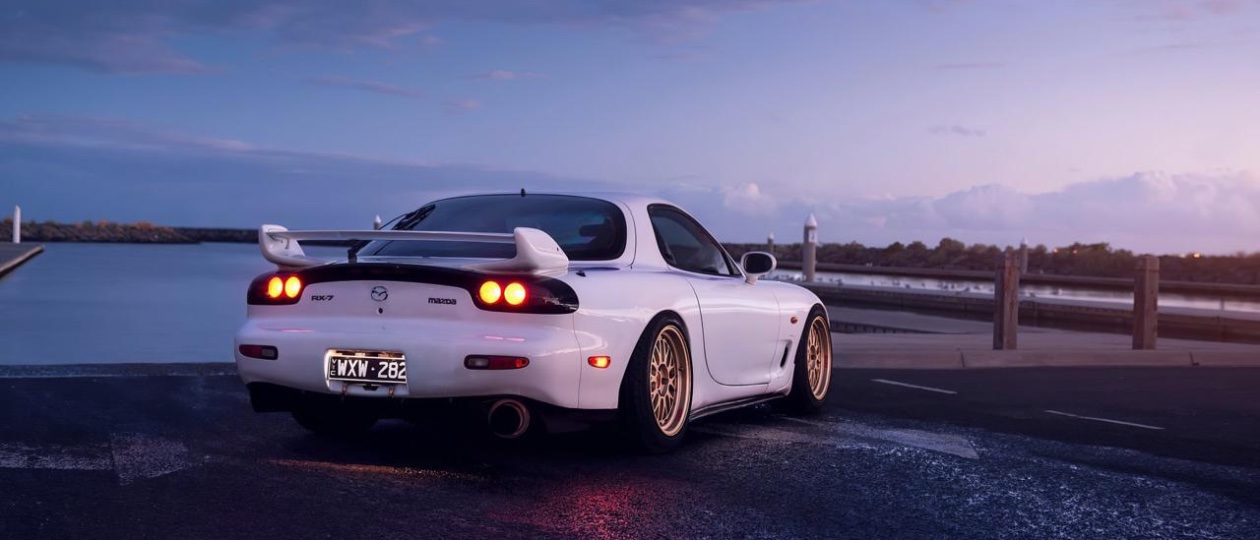
Mazda RX-7 FD Buyer's Guide: The Most Beautiful Japanese Sports Car Ever Made
mazda rx-7-fd · 1992–2002 · $35,000–$100,000
The Mazda RX-7 FD is the most beautiful Japanese sports car ever made and the rotary engine's finest expression -- a car whose combination of design purity, mechanical uniqueness, and driving brilliance makes it irreplaceable in an era of turbocharged four-cylinder homogeneity.
History
When Mazda unveiled the third-generation RX-7 at the 1991 Tokyo Motor Show, the automotive world was confronted with something genuinely extraordinary. The FD3S -- as it's known by its chassis code -- wasn't just a new sports car. It was Mazda's declaration that the rotary engine could anchor a world-class, no-compromise performance machine capable of competing with anything from Stuttgart, Munich, or Maranello. The fact that they succeeded so completely, and that the car remains so breathtakingly beautiful more than three decades later, is a testament to engineering ambition that borders on recklessness.
The FD was developed under the leadership of Yoichi Sato, who insisted that the new RX-7 would be a pure sports car -- not a grand tourer, not a luxury coupe, but a lightweight, mid-engined-feeling machine that prioritized driving dynamics above all else. Sato's team achieved this by positioning the twin-turbocharged 13B-REW rotary engine behind the front axle, creating a front-midship layout that gave the car 50/50 weight distribution and a center of gravity lower than a Porsche 911's.
The 13B-REW was itself a masterpiece of engineering determination. This 1.3-liter (by equivalent displacement) twin-rotor engine used sequential twin turbochargers to produce 255 horsepower in US trim and up to 280 horsepower in Japanese specification. The sequential turbo system was remarkably sophisticated for 1992: a small primary turbo spooled quickly for responsive low-end torque, while a larger secondary turbo joined at approximately 4,500 RPM to provide a surge of top-end power. The transition between turbos was managed by a series of solenoid-controlled air valves, a pre-butterfly valve, and a charge control valve -- a system of Byzantine complexity that worked beautifully when properly maintained and became a maintenance nightmare when neglected.
The RX-7 FD's curb weight of approximately 2,800 pounds was astonishing for a turbocharged sports car with power steering, air conditioning, and a full interior. Mazda achieved this through obsessive weight optimization: aluminum hood, thin glass, lightweight seats, and a compact powertrain that weighed significantly less than comparable piston engines. The result was a power-to-weight ratio that embarrassed the Toyota Supra MK4 and matched Porsche's 993 Turbo at a fraction of the cost.
In the United States, the RX-7 was sold from 1993 to 1995 before emissions regulations and low sales volume forced Mazda to withdraw it from the American market. In Japan, production continued until 2002, producing a series of special editions that culminated in the legendary Spirit R -- Mazda's farewell to the rotary sports car and one of the most desirable JDM cars ever produced.
The RX-7 FD's competitive context is essential to understanding its significance. It arrived during the golden age of Japanese performance -- alongside the Supra, the 300ZX, the NSX, and the Skyline GT-R. Each of those cars chose a different path: the Supra prioritized straight-line power, the NSX pursued exotic-car refinement, and the GT-R weaponized all-wheel-drive technology. The RX-7 chose lightness and balance, and in doing so, it created a driving experience that none of its contemporaries could match. The Honda S2000 would later pursue a similar philosophy of lightweight purity, but even that brilliant car lacked the FD's turbocharged mid-range punch and its ability to carry speed through corners with supernatural composure.
Today, the RX-7 FD occupies a unique position in the collector car market. It's simultaneously one of the most desirable and most misunderstood Japanese sports cars -- beloved for its design and driving dynamics, feared for the rotary engine's reputation for unreliability. That fear, as we'll explore, is largely unjustified if you understand what the engine needs.
Variants
Base
The base-model RX-7 was sold exclusively in the US market during 1993-1995 and represented remarkable value. It included the full 13B-REW twin-turbo powertrain, a five-speed manual transmission, power steering, and the same fundamental chassis as the higher-trim models. What it lacked was largely cosmetic and comfort-oriented: manual windows, a simpler audio system, and cloth seats. For driving enthusiasts, the base model offered the purest RX-7 experience at the lowest weight.
Touring
The Touring package added leather seats, power windows, a premium Bose audio system, and front fog lights. It was the most popular US-market trim and represents the best balance of daily usability and sports car performance. Most surviving US-market RX-7s are Touring models, making them the easiest trim to find on the secondhand market.
R1
The R1 was the enthusiast's choice in the US market. It replaced the Touring model's luxury features with performance-oriented upgrades: a front strut tower brace, a viscous limited-slip differential (replacing the Touring's Torsen unit), stiffer suspension tuning, a rear spoiler delete option, and lightweight 16-inch BBS wheels. The R1 weighed approximately 50 pounds less than the Touring and offered sharper turn-in and more aggressive handling.
R2
The R2 combined Touring comfort features with R1 performance modifications, creating a grand touring specification that satisfied owners who wanted both. It's the rarest US-market trim and commands a modest premium from collectors, though performance differences between the R1 and R2 are minimal.
Spirit R (JDM Final Edition)
The Spirit R is the crown jewel of the RX-7 lineage. Produced exclusively for the Japanese domestic market in 2002 as a limited run of 1,500 units, it was Mazda's farewell to the rotary sports car and the car that encapsulated everything the company had learned across three generations of RX-7 development.
The Spirit R came in three types: Type A (two-seater, five-speed manual), Type B (two-seater, four-speed automatic), and Type C (four-seater, five-speed manual). Type A is the most desirable, featuring Bilstein dampers, red Recaro seats, 17-inch BBS forged wheels, strengthened differential, and a titanium strut tower brace. The engine received revised port timing and a dedicated ECU calibration that extracted the maximum performance allowed under Japan's gentleman's agreement horsepower ceiling.
Spirit R values have been climbing dramatically since the 25-year import rule made 2002 examples eligible for US registration. Clean Type A examples now command $80,000-$120,000 and show no signs of plateauing.
Common Issues
Apex Seal Failure
The rotary engine's most discussed weakness is apex seal wear. The apex seals are the rotary equivalent of piston rings -- they seal the three combustion chambers within each rotor housing and are critical to compression and power production. Unlike piston rings, which operate in a cylindrical bore with relatively uniform wear patterns, apex seals sweep across an epitrochoidal housing surface with varying contact pressures and velocities.
Apex seal failure manifests as gradually declining compression, increased oil consumption, hard starting (especially hot), and eventually misfires. The rotary engine tolerates some compression variation between rotors, but once a seal fails completely, the engine loses power dramatically and repair requires a complete engine rebuild.
The reality, however, is more nuanced than the rotary engine's reputation suggests. Apex seals on a properly maintained 13B-REW typically last 80,000-120,000 miles -- comparable to the timing chain service life on many piston engines. The key factors are oil quality (always use rotary-approved oil), warm-up protocol (never rev a cold rotary engine hard), and avoiding prolonged deceleration without throttle (which starves the apex seal surfaces of oil). A rebuild with new apex seals runs $3,000-$5,000 at a rotary specialist, which is expensive but not ruinous.
Coolant Sealing
The water seals in the 13B-REW rotary engine separate the coolant passages from the rotor housings. When these seals deteriorate, coolant can leak into the combustion chambers, causing white smoke from the exhaust, coolant loss without visible external leaks, and eventually overheating and catastrophic engine damage.
Coolant seal failure is arguably more dangerous than apex seal wear because it can progress rapidly from subtle symptoms (slightly low coolant level, occasional white exhaust puff) to catastrophic overheating. Regular coolant level monitoring and compression testing are essential preventive measures.
Oil Metering Pump
The rotary engine uses an oil metering pump (OMP) to inject small quantities of engine oil into the rotor housings, lubricating the apex seals and side seals during operation. The OMP is driven by the engine and meters oil proportionally to RPM. When the OMP fails or is removed (a common modification among tuners who premix oil with fuel instead), the apex seals can run dry and wear rapidly.
If buying a modified RX-7, verify that the OMP is either functioning correctly or that the owner has been religiously premixing oil with fuel. A non-functioning OMP with no premix is a death sentence for the engine.
Sequential Turbo System
The twin-sequential turbo system is brilliant when it works and frustrating when it doesn't. The system uses multiple solenoid valves, vacuum lines, and actuators to manage the transition from single to twin turbo operation. Vacuum line deterioration, solenoid failures, and actuator sticking can cause boost problems ranging from a rough transition between turbos to complete loss of secondary turbo function.
Many owners address this by converting to a single turbo setup, which simplifies the system dramatically at the cost of low-end responsiveness. Whether to maintain the sequential system or convert to single turbo is one of the defining decisions of RX-7 FD ownership. Purists and collectors strongly prefer the original sequential system.
Pre-Catalyst Failure
The US-market RX-7 used a pre-catalyst mounted directly to the turbine outlet. At high exhaust temperatures, this catalyst can break apart internally, sending ceramic fragments back into the turbocharger and causing catastrophic damage. Most knowledgeable owners have removed or replaced the pre-catalyst, but always verify its condition on any US-market car.
Pricing Analysis
The RX-7 FD market has undergone a dramatic transformation since 2018, driven by the 25-year import rule unlocking JDM-only models for US registration, the broader appreciation of 1990s Japanese sports cars, and the growing recognition that the FD is one of the most beautiful automotive designs ever created.
Current Market Ranges (2026)
US-Market (1993-1995):
- Project/high-mileage: $30,000-$38,000
- Driver-quality (sorted, maintained): $40,000-$55,000
- Excellent condition (documented history): $55,000-$75,000
- Low-mileage collector: $80,000-$100,000+
JDM (1992-2002):
- Standard models: $35,000-$60,000 (depending on condition and import status)
- Spirit R Type A: $80,000-$120,000+
Market Trajectory
Bring a Trailer and Cars and Bids auction results paint a clear picture: the RX-7 FD has appreciated approximately 15-20% annually since 2020, outpacing even the Toyota Supra MK4 in percentage terms. The FD benefits from lower production numbers, more dramatic styling, and the irreplaceable uniqueness of the rotary engine.
The investment case for the RX-7 FD is straightforward: no one will ever build another rotary-powered sports car at this level (Mazda's own subsequent rotary efforts have been range-extender hybrids, not sports cars). The engine's uniqueness -- its sound, its power delivery, its mechanical character -- cannot be replicated by any other architecture. As the supply of clean examples diminishes through attrition and the pool of eligible JDM imports is finite, prices have only one direction to go.
The Honda S2000 provides a useful comparison: both are lightweight Japanese sports cars with passionate followings, but the RX-7 FD's combination of forced induction, exotic engine architecture, and stunning design gives it a higher ceiling. Clean S2000s are approaching six figures; clean FDs are already there, with the Spirit R pushing well beyond.
Inspection Checklist
Engine and Rotary-Specific Checks
- Compression test: This is non-negotiable. A rotary compression test requires a specialized gauge (standard piston engine gauges cannot read the rotary's rapid pressure pulses). Each rotor should show 95-100 PSI minimum, with no more than 10 PSI difference between rotors. Values below 80 PSI indicate significant apex seal wear.
- Cold start behavior: The engine should start within 2-3 cranks when cold. Extended cranking suggests low compression or flooding tendency. Hot restart difficulty is a classic symptom of worn apex seals.
- Exhaust smoke analysis: White smoke on startup that clears quickly is normal condensation. Persistent white smoke indicates coolant seal issues. Blue smoke indicates oil seal problems. Both warrant further investigation.
- Turbo transition: Drive through the turbo transition zone (4,000-5,000 RPM) in 3rd gear at full throttle. The transition should be smooth with a noticeable surge in power as the secondary turbo comes online. Hesitation, surging, or flat spots indicate solenoid or vacuum system issues.
- Oil metering pump: Verify it's present and functional. Check for premix evidence (fuel smell, oil bottles in the trunk) if the OMP has been removed.
Exterior and Structure
- Body condition: The FD's flowing bodywork hides structural damage well. Check all panel gaps carefully -- inconsistencies indicate previous collision repair.
- Underbody inspection: Look for rust on the frame rails, floor pans, and rear quarter panels. JDM imports from snowy regions of Japan can carry significant corrosion.
- Paint quality: The FD's curved surfaces show paint flaws clearly. Look for orange peel, color mismatch, and overspray as evidence of repainting.
Interior and Electronics
- Gauge cluster: All gauges should function correctly. The tachometer should sweep smoothly to the 8,000 RPM redline.
- Seat condition: The bolsters on the driver's seat wear quickly. Excessive bolster wear suggests high mileage regardless of odometer reading.
- Climate control: The A/C system uses R-134a refrigerant (converted from R-12 on early cars) and should cool effectively. A non-functioning A/C system costs $800-$1,500 to repair.
Maintenance Guide
Maintaining an RX-7 FD requires understanding the rotary engine's unique needs and respecting its engineering. The 13B-REW is not fragile -- it's demanding. Give it what it needs, and it will provide 100,000+ miles of extraordinary service. Neglect it, and you'll be shopping for a rebuild.
Engine Oil
The rotary engine uses oil by design -- the oil metering pump injects a small amount of oil into the rotor housings to lubricate the seals. This means the oil level gradually drops between changes, and topping up is a normal part of ownership. Check the oil level every 500 miles and top up as needed.
Use a high-quality conventional or semi-synthetic oil (10W-30 or 10W-40). Full synthetic oils are controversial in the rotary community -- some owners report increased oil consumption and apex seal wear with certain full synthetic formulations because the oil is too slippery to properly lubricate the seals. Change oil every 3,000 miles or every 3 months, whichever comes first. If you track the car, change oil after every event.
Warm-Up and Cool-Down Protocol
The rotary engine demands proper thermal management. Never rev a cold rotary above 3,000 RPM -- the apex seals and housing need time to reach operating temperature and establish proper sealing. Drive gently for the first 5-10 minutes until the coolant gauge reaches normal operating temperature.
After spirited driving, idle the engine for 60-90 seconds before shutting off to allow the turbochargers to cool and prevent oil coking in the turbo bearings. A turbo timer automates this process and is a worthwhile investment.
Cooling System
The 13B-REW runs hotter than most piston engines, making cooling system maintenance critical. Flush coolant every 2 years or 20,000 miles. Replace all rubber coolant hoses every 50,000 miles -- heat-cycled rubber deteriorates from the inside out and can fail without warning. The thermostat and water pump should be replaced every 60,000 miles as preventive maintenance.
If you track the car, an upgraded aluminum radiator is essentially mandatory. The stock radiator is adequate for street driving but marginal for sustained high-RPM lapping sessions.
Ignition System
The rotary engine's ignition demands are extreme -- the 13B-REW fires each rotor three times per revolution, requiring an ignition system that can sustain firing rates far higher than any piston engine. Replace spark plugs every 20,000 miles using OEM NGK plugs (the rotary uses a unique plug design -- do not substitute). Replace ignition coils and spark plug wires every 40,000 miles. Weak ignition causes misfires, flooding, and poor apex seal lubrication.
Transmission and Differential
The Getrag five-speed manual transmission is robust but benefits from regular fluid changes. Change transmission fluid every 30,000 miles using 75W-90 gear oil. The differential fluid should be changed on the same schedule. Fresh fluid makes a noticeable improvement in shift quality, particularly in cold weather.
Turbo System Maintenance
If maintaining the sequential turbo system, inspect all vacuum lines annually and replace any that show cracking or hardening. The solenoid valves should be tested and cleaned every 30,000 miles. The turbo oil return lines should be inspected for carbon buildup and cleaned or replaced every 60,000 miles.
Insurance
The RX-7 FD presents unique insurance challenges. Standard auto insurers consistently undervalue these cars -- a Geico or Progressive policy might cover an FD at $15,000-$20,000 actual cash value, which is less than half what even a rough example commands on the open market.
Hagerty
Hagerty is the preferred insurer for most RX-7 FD owners. Their agreed-value policies reflect actual market prices, and they understand the FD's unique position as both a performance car and a collectible. Expect premiums of $800-$1,500 per year for a $50,000-$80,000 agreed value. Hagerty's valuation tools track the FD market closely and are useful for annual policy revaluation.
American Collectors
American Collectors offers agreed-value coverage at competitive premiums. They tend to be more flexible than Hagerty on daily driver restrictions, which is relevant for FD owners who use their cars regularly. Their coverage terms are solid and claims processing is generally smooth.
Insurance Strategy
Given the FD's rapid appreciation, annual policy revaluation is essential. A policy written two years ago could undervalue your car by $15,000-$25,000. Document any value-adding modifications (the market rewards well-executed single turbo conversions, for example) and provide auction comparables to support your agreed-value claim.
Track day coverage is important for FD owners. The car's balance and light weight make it an exceptional track machine, and many owners regularly attend HPDEs. Confirm your policy's position on track events and consider per-event endorsements if available.
The Honda S2000 and Toyota Supra MK4 face identical insurance challenges -- all three are appreciating Japanese sports cars that standard carriers dramatically undervalue. Specialty agreed-value coverage is the only rational choice for any of them.
The bottom line: do not insure an RX-7 FD with a standard carrier. The difference between what AllState thinks your car is worth and what Bring a Trailer will prove it's worth is measured in tens of thousands of dollars. An agreed-value policy costs a few hundred dollars more per year and provides the financial protection that a car of this caliber demands. Given that a clean FD now costs more than most new cars, protecting that investment properly isn't optional -- it's basic financial responsibility.
Insure Your rx-7-fd
Agreed-value policies are essential for appreciating classics. Lock in today's value before the market moves.
Find Your rx-7-fd
Browse current listings and recently sold examples to find the right one at the right price.
Parts & Maintenance
Keep your rx-7-fd running strong with OEM and quality aftermarket parts.
Recommended Tools
Our curated list of tools for rx-7-fd owners -- from basic maintenance to weekend wrenching.
Need advice on this car?
Chat with us on WhatsApp — get the Pre-Purchase Inspection Checklist, ask about pricing, or tell us about yours.
Chat with us on WhatsAppRecent Auction Activity
- Auction Watch: Week of March 15, 2026March 15, 2026
- Auction Watch: Week 10, 2026March 2, 2026