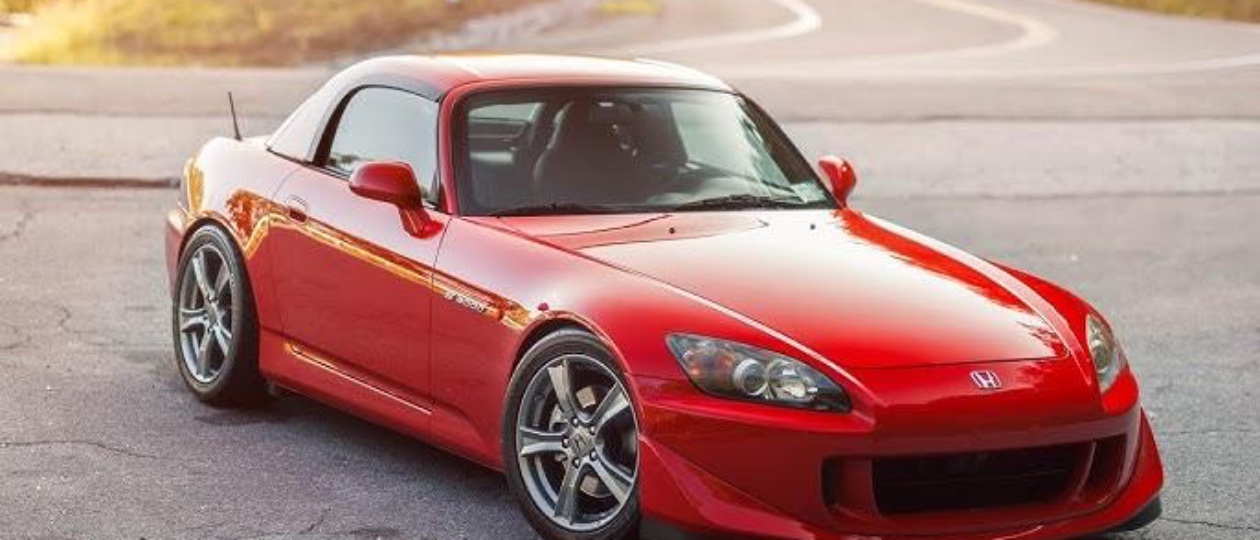
Honda S2000 Buyer's Guide: The Last Great Analog Sports Car
honda s2000 · 1999–2009 · $25,000–$80,000
The Honda S2000 is the definitive future classic sports car, combining Honda's legendary F20C engine with a perfectly balanced chassis that will only appreciate as the era of analog driving fades.
History
Honda developed the S2000 to celebrate its 50th anniversary, and the result was nothing short of extraordinary. The project, codenamed AP1, was led by Shigeru Uehara -- the same engineer who had shepherded the legendary NSX into production a decade earlier. When Honda's board greenlit a front-engine, rear-drive roadster to commemorate half a century of manufacturing, Uehara didn't just design a convertible. He built a statement of intent.
The F20C engine that powered the original AP1 produced 240 horsepower from just 2.0 liters of displacement. At the time of its 1999 debut, it held the record for the highest specific output of any naturally aspirated production engine -- 120 horsepower per liter. That figure was achieved through Honda's VTEC variable valve timing system, individual throttle bodies, forged internals, and an 11.7:1 compression ratio that demanded premium fuel and rewarded it with an intoxicating pull to the 9,000 RPM redline.
Production ran from 1999 to 2009, spanning two distinct generations. The S2000 arrived during a remarkable period of Honda ambition: the NSX was still in production, the Integra Type R was terrorizing track days, and the Prelude was offering four-wheel steering to anyone who'd listen. The S2000 was the crown jewel -- a bespoke sports car built on a dedicated assembly line at the Takanezawa plant in Tochigi Prefecture, where each F20C engine was hand-assembled by a single technician who signed the cam cover upon completion.
The car was Honda's answer to a question nobody else was asking: what happens when you apply Formula One thinking to a $30,000 roadster? The answer was a car with a power-to-weight ratio that embarrassed vehicles costing twice as much, a front-mid engine layout that delivered 50/50 weight distribution, and a six-speed manual transmission with one of the most precise shift actions ever fitted to a production car.
International reception was overwhelmingly positive. In Japan, the S2000 was an instant legend. In Europe, it competed directly against the Porsche Boxster and BMW Z3 M Roadster at a fraction of the price. In the United States, it became a cult hero -- the car that proved you didn't need forced induction or a big displacement V8 to experience genuine sports car thrills. Its contemporaries in the Japanese performance space, like the Mazda RX-7 FD and the Toyota Supra MK4, were targeting different segments with turbocharged power, but the S2000 carved its own niche as the naturally aspirated purist's weapon.
Honda discontinued the S2000 in 2009 with no direct successor. The global financial crisis, tightening emissions regulations, and a corporate shift toward hybrids and efficiency made another high-revving, low-volume sports car economically unfeasible. The last S2000s rolled off the line with a quiet finality -- Honda has never built anything like it since, and probably never will again.
Variants
AP1 (1999-2003)
The AP1 is the purist's S2000, and for many enthusiasts, the only S2000 worth owning. It's the raw, unfiltered expression of Uehara's vision: a 2.0-liter F20C engine revving to 9,000 RPM, razor-sharp steering with electric power assist that provides genuine road feel, and a suspension geometry tuned for immediate response over comfort. The AP1's chassis is noticeably stiffer and more communicative than the later AP2, with quicker turn-in and a rear end that demands respect.
The trade-off is a car that punishes sloppy inputs. The AP1 earned a reputation for snap oversteer, particularly in wet conditions or when driven by inexperienced pilots who lifted off the throttle mid-corner. This isn't a defect -- it's the natural consequence of a short wheelbase, 50/50 weight distribution, and a limited-slip differential doing exactly what physics demands. For skilled drivers, the AP1's willingness to rotate is a feature. For everyone else, it's a cautionary tale.
Early AP1s (1999-2001) are distinguished by their slightly softer engine mounts and a different ECU calibration that some owners perceive as smoother at low RPM. The 2002-2003 models received revised valve springs and retainers, along with minor interior updates.
AP2 (2004-2009)
Honda listened to the market feedback and refined the S2000 significantly for the 2004 model year. The F20C was replaced by the F22C1 -- a 2.2-liter unit that traded 200 RPM of redline (now 8,000 RPM) for a broader torque curve. Peak torque rose from 153 lb-ft to 162 lb-ft and arrived 1,000 RPM lower, making the AP2 substantially more livable in daily driving.
The suspension was retuned with longer rear toe links and revised geometry that reduced the snap oversteer tendency. The AP2 is a more forgiving car at the limit -- it transitions from grip to slide more progressively, giving the driver more warning and more time to correct. Purists call this "numb." Realists call it "safer."
The AP2 also received a redesigned front bumper, clear turn signal lenses, revised headlight internals, and improved interior materials including a redesigned center console and gauge cluster with a digital speedometer.
CR (Club Racer, 2008-2009)
The CR represents Honda's final, definitive statement on what the S2000 could be. Only around 700 units were produced for the US market, each finished in one of three colors: Berlina Black, Apex Blue Pearl, or Rio Yellow Pearl. The CR deleted the soft top entirely, fitting instead a removable hardtop that reduced weight and increased torsional rigidity by approximately 10%.
The suspension was stiffened with higher spring rates and revised damping, while the front lip spoiler and rear wing added genuine aerodynamic downforce at speed. Inside, the air conditioning was retained (Honda knew their market), but the radio and associated wiring were deleted. The seats were replaced with fixed-back racing buckets that hold the driver securely but make ingress and egress a workout.
The CR was effectively Honda's goodbye gift to the S2000 faithful -- a car that acknowledged what the aftermarket had been doing for years and delivered a factory-engineered track package that no bolt-on kit could match.
Common Issues
AP1 Snap Oversteer
The most discussed "issue" with the S2000 isn't an issue at all -- it's a characteristic. The AP1's tendency to snap the rear end around during mid-corner lift-off or abrupt throttle transitions has caused more accidents than any mechanical failure. If you're shopping for an AP1, this behavior should inform your driving approach, not deter your purchase. Understand weight transfer dynamics before you push the car.
Soft Top Degradation
The vinyl soft top is the S2000's most consistent maintenance headache. UV exposure causes the rear window to cloud and eventually crack, while the fabric itself fades and weakens over time. Budget $400-$1,200 for a replacement top depending on whether you choose OEM or aftermarket. The mechanism itself is generally reliable, but the latches at the header rail can become finicky and should be lubricated annually.
Retractable Headlight Motor Failures
Early AP1 models used retractable headlight covers -- they don't actually pop up, but the motors that adjust the headlight angle can fail. Replacement motors are available but the job requires removing the bumper and headlight assembly, making it a 3-4 hour job at a shop.
Timing Chain Tensioner
The F20C and F22C1 engines use a timing chain rather than a belt, which is theoretically a lifetime component. However, on high-mileage examples (120,000+ miles), the chain tensioner can wear, causing a rattle on cold starts. If left unaddressed, a failed tensioner can allow the chain to skip teeth, causing catastrophic valve-to-piston contact. This is rare but devastating -- always listen for chain noise on a cold start during your pre-purchase inspection.
Worn Synchros (2nd and 3rd Gear)
Aggressive driving takes a toll on the S2000's synchromesh rings, particularly in second and third gear. Notchy or grinding shifts in these gears are a sign of worn synchros and typically indicate the car has been driven hard. A transmission rebuild with new synchros runs $1,500-$3,000 at an independent shop.
Aftermarket Modification Damage
The S2000's popularity in the tuning community means many examples have been modified, some competently and others disastrously. Watch for evidence of poorly installed coilovers (cracked mounting points), turbo kits with inadequate fueling, and ECU reflashes that push the engine beyond safe parameters. A modified S2000 isn't inherently bad, but you need to evaluate the quality of the work carefully.
Pricing Analysis
The S2000 market has undergone a fundamental repricing since 2020, transforming from an affordable used sports car into a legitimate collectible. This shift mirrors what happened with the Mazda RX-7 FD a few years earlier, and the trajectory suggests continued appreciation.
Current Market Ranges (2026)
AP1 (1999-2003):
- Project/high-mileage: $22,000-$28,000
- Driver-quality (80,000-120,000 miles): $30,000-$42,000
- Excellent condition (under 60,000 miles): $45,000-$65,000
- Museum-quality (under 20,000 miles): $70,000-$95,000
AP2 (2004-2009):
- Project/high-mileage: $24,000-$30,000
- Driver-quality: $32,000-$45,000
- Excellent condition: $48,000-$68,000
CR (2008-2009):
- Any condition: $75,000-$120,000+
- Low-mileage examples regularly exceed six figures at auction
Market Trajectory
Bring a Trailer auction results tell the story clearly: the average selling price for an S2000 has climbed roughly 12-15% year-over-year since 2020, with no signs of plateau. The CR has been the standout performer, with auction results occasionally touching $130,000 for pristine examples -- a staggering figure for a car that stickered under $40,000 new.
The S2000's investment thesis is straightforward. It was the last great naturally aspirated, high-revving, manual-only sports car from a mainstream manufacturer. As emissions regulations tighten and electrification accelerates, cars like the S2000 become irreplaceable artifacts of a specific engineering philosophy. The supply is fixed. The demand is growing. The math is simple.
The Toyota Supra MK4 has already demonstrated where this trajectory leads -- six-figure prices for clean examples of a Japanese sports car that was merely "expensive" a decade ago. The S2000 is following the same path, just a few years behind.
Inspection Checklist
A thorough pre-purchase inspection is non-negotiable for any S2000 purchase. These cars have been crashed, modified, tracked, and reassembled more than almost any other sports car of their era. Here's what to check:
Exterior and Structure
- Soft top condition: Check for tears, UV damage, clouded or cracked rear window. Operate the top fully -- it should latch and unlatch smoothly without excessive force.
- Panel gaps: Inconsistent gaps between fenders, hood, and bumper indicate previous accident repair. The S2000's aluminum hood is particularly telling -- wavy or misaligned hood suggests body work.
- Front subframe mounting points: Get under the car and inspect the front subframe for collision damage, cracks, or repair welds. Many S2000s have hit curbs or other cars and been repaired cosmetically while structural damage remains.
- Rocker panels and rear quarters: Check for rust, particularly on cars from northern climates. The S2000 is generally rust-resistant but not immune.
Drivetrain
- Cold start: Listen for timing chain rattle during the first 10 seconds of a cold start. A brief rattle that disappears is the tensioner taking up slack -- concerning but not catastrophic. Persistent rattle is a red flag.
- VTEC engagement: Drive the car through the full rev range in 2nd and 3rd gear. VTEC should engage cleanly at the crossover point (around 5,800 RPM on AP1, 6,000 on AP2) with a noticeable change in cam profile. Hesitation or misfires suggest worn VTEC solenoid or oil pressure issues.
- Transmission feel: Every gear should engage smoothly. Pay special attention to 2nd-3rd and 3rd-4th shifts. Any grinding, notchiness, or resistance indicates worn synchros.
- Clutch engagement: The S2000's clutch should engage within a predictable, narrow range. Extremely high engagement point suggests a worn clutch. Shuddering or grabbing indicates a contaminated or worn pressure plate.
- Differential noise: With the car on a lift, rotate the rear wheels by hand and listen for bearing noise. Also check for leaks around the differential housing seals.
Interior and Electronics
- VIN verification: Match the VIN on the dash, door jamb, and engine bay to the title. The S2000 is a high-theft vehicle.
- Gauge cluster operation: All gauges should read correctly. The tachometer should sweep smoothly -- erratic behavior suggests an electrical issue.
- Power window operation: Both windows should operate smoothly. Slow or stalling windows indicate worn regulators, a common and inexpensive fix.
Maintenance Guide
The S2000 is one of the most reliable sports cars ever manufactured, but it rewards proper maintenance with even greater longevity. Honda engineered this car to survive high-RPM operation for hundreds of thousands of miles -- but only if you feed it correctly.
Engine Oil
This is the single most important maintenance item on any S2000. The F20C and F22C1 engines operate at extreme RPMs with tight tolerances, and oil quality directly determines engine longevity. Use Honda-spec 10W-30 (or 10W-40 in hot climates) and change it every 5,000 miles or every 6 months, whichever comes first. If you track the car, change the oil after every track day regardless of mileage.
The S2000 engine does not forgive low oil levels. The combination of high RPM operation and the front-mid engine layout means oil starvation during hard cornering can occur if the level is low. Check the dipstick before every spirited drive and keep the oil level at or slightly above the full mark.
Valve Adjustment
The F20C/F22C1 engines use mechanical valve adjusters -- no hydraulic lifters to self-compensate. Valve clearances should be checked every 30,000 miles and adjusted as needed. This is a 2-3 hour job that requires feeler gauges and patience but is well within the capability of a competent home mechanic. Tight valves cause hard starting and potential valve burning. Loose valves cause ticking and reduced performance.
Timing Chain
The timing chain is a lifetime component under normal conditions, but "normal" for an S2000 often means 8,000+ RPM runs multiple times per drive. Inspect the chain tensioner and guides at 100,000 miles. If the tensioner shows wear, replace it proactively -- the $300-$500 cost of the parts is a rounding error compared to the $5,000-$8,000 cost of a valve job if the chain jumps.
Clutch
The stock clutch is surprisingly durable given the engine's power band. Most examples last 80,000-120,000 miles with street driving. A clutch replacement including flywheel resurface runs $1,200-$1,800 at an independent shop. The dual-mass flywheel on AP2 models should be replaced with a single-mass unit if you track the car -- it's lighter, more responsive, and doesn't develop the shudder that plagues worn dual-mass units.
Cooling System
The S2000's cooling system is adequate for street use but marginal for extended track sessions. Coolant should be flushed every 50,000 miles or 4 years. If you track the car, consider a larger aftermarket radiator -- the stock unit can struggle to maintain temperature during sustained high-RPM driving in ambient temperatures above 85F.
Differential and Transmission Fluids
The limited-slip differential and transmission share a sensitivity to fluid quality. Change both fluids every 30,000 miles using Honda MTF (manual transmission fluid) for the gearbox and 75W-90 gear oil for the differential. Fresh fluid makes a noticeable difference in shift quality and differential behavior, particularly in cold weather.
Suspension and Bushings
The S2000's chassis uses rubber bushings that deteriorate over time. At 80,000-100,000 miles, expect to replace front lower control arm bushings, rear trailing arm bushings, and possibly the compliance pivot. Polyurethane replacements are popular but introduce more NVH -- a reasonable trade-off for improved handling precision.
Insurance
Insurance is where the S2000's collectible status becomes financially relevant. Standard auto insurance companies consistently undervalue these cars, offering actual cash value policies that would pay $15,000-$20,000 for a car worth $45,000+ on the open market. This gap makes agreed-value specialty insurance essential.
Hagerty
Hagerty is the gold standard for collector car insurance and they understand S2000 valuations better than any other insurer. Their agreed-value policies guarantee a specific payout in the event of a total loss -- no depreciation, no haggling with adjusters. Expect premiums of $800-$1,500 per year for a $40,000-$60,000 agreed value, depending on your driving record, annual mileage, and storage situation. Hagerty also provides complimentary valuation tools that are useful for tracking your car's market position over time.
American Collectors
American Collectors offers competitive agreed-value policies with somewhat lower premiums than Hagerty. Their coverage is solid and they're a good option for owners who want the agreed-value protection without Hagerty's premium pricing. They also tend to be more flexible on daily driver usage restrictions.
Insurance Strategy
For S2000 owners, the smart play is an agreed-value policy through a specialty insurer combined with comprehensive coverage that accounts for the car's appreciating value. Review your agreed value annually -- the market is moving fast enough that a policy written 18 months ago may be significantly undervaluing your car today.
If you're using the S2000 as a daily driver, some specialty insurers offer hybrid policies that combine agreed-value total loss protection with standard liability and collision coverage. These cost more than a pure collector policy but provide the protection you need for a car that appreciates while you drive it.
The BMW E46 M3 faces similar insurance challenges -- any car in this appreciating-classic category demands specialty coverage to protect your investment.
One often-overlooked insurance consideration is track day coverage. Most agreed-value policies exclude damage sustained during competitive events, including timed lapping sessions that some insurers classify as racing. If you plan to track your S2000 -- and you should, because it's one of the most rewarding track day cars under $50,000 -- confirm your policy's stance on high-performance driving events (HPDEs) before your first session. Some specialty insurers offer track day endorsements for an additional premium, typically $200-$400 per event. It's worth every penny for the peace of mind of knowing your $50,000 investment is protected while you explore its considerable limits on a closed course.
The bottom line: do not insure an S2000 with a standard carrier. The gap between what State Farm thinks your car is worth and what the market will pay for it is measured in tens of thousands of dollars. A specialty agreed-value policy costs a few hundred dollars more per year and eliminates the single biggest financial risk of S2000 ownership -- losing the car to an accident or theft and receiving a fraction of its true value in return.
Insure Your s2000
Agreed-value policies are essential for appreciating classics. Lock in today's value before the market moves.
Find Your s2000
Browse current listings and recently sold examples to find the right one at the right price.
Recommended Tools
Our curated list of tools for s2000 owners -- from basic maintenance to weekend wrenching.
Need advice on this car?
Chat with us on WhatsApp — get the Pre-Purchase Inspection Checklist, ask about pricing, or tell us about yours.
Chat with us on WhatsAppRecent Auction Activity
- Auction Watch: Week 12, 2026March 16, 2026
- Auction Watch: Week of March 15, 2026March 15, 2026
- Auction Watch: Week 10, 2026March 2, 2026