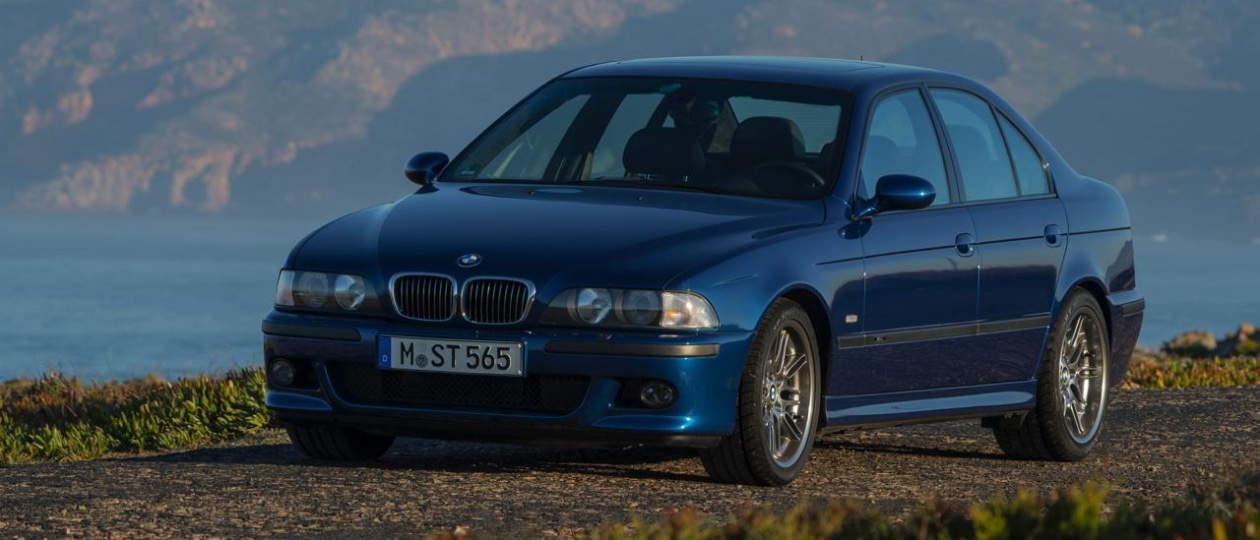
BMW E39 M5 Buyer's Guide: The Greatest Sport Sedan Ever Built
bmw e39-m5 · 1998–2003 · $30,000–$90,000
The BMW E39 M5 is the greatest sport sedan ever manufactured -- the last M5 built before electronics diluted the formula, and a future classic whose values will eclipse six figures within the decade.
History
BMW's M division has built some extraordinary cars, but the E39 M5 stands alone as the purest expression of what a sport sedan should be. When it debuted at the 1998 Geneva Motor Show, the automotive press didn't just praise it -- they declared it the benchmark against which every future performance sedan would be measured. Two and a half decades later, nothing has dethroned it.
The S62 engine is the heart of the E39 M5's legend. This 4.9-liter naturally aspirated V8 was hand-assembled at BMW's engine plant in Munich, each unit signed by the technician who built it. It produced 394 horsepower at 6,600 RPM and 369 lb-ft of torque at 3,800 RPM -- figures that were extraordinary for a naturally aspirated sedan engine in 1998 and remain deeply impressive today. The S62 was derived from the S50/S52 inline-six architecture but shared components with the BMW V12 Le Mans racing engine, including its individual throttle bodies and the VANOS variable valve timing system that operated on both intake and exhaust camshafts.
The M division's philosophy with the E39 M5 was deceptively simple: take the finest luxury sedan chassis BMW had ever engineered and install the most powerful naturally aspirated V8 they could build. The base E39 5 Series was already the gold standard for executive sedans -- superbly balanced, impeccably refined, and built with a structural rigidity that put contemporaries from Mercedes and Audi to shame. The M division reinforced the chassis, upgraded the suspension geometry, fitted massive brakes, and bolted in the S62. The result was a car that could lap the Nurburgring Nordschleife in under 8 minutes while carrying four adults and their luggage in leather-trimmed comfort.
What makes the E39 M5 irreplaceable is what it doesn't have. There is no turbocharger masking engine characteristics. There is no dual-clutch transmission shifting faster than human reflexes. There is no adaptive suspension electronically filtering road feedback. There is no launch control automating the art of the perfect start. The E39 M5 has a naturally aspirated V8, a six-speed manual transmission (the Getrag Type D gearbox, the last manual-only M5), hydraulic power steering with actual road feel, and a driver's seat. Everything between those elements is skill, nerve, and the greatest sport sedan chassis ever designed.
BMW produced approximately 20,000 E39 M5s worldwide over its five-year run. The car was available in both left-hand and right-hand drive configurations, and was sold in North America, Europe, South Africa, and select Asian markets. Each unit was assembled on a separate line from standard 5 Series production, with additional quality control steps and hand-finishing that added approximately two hours to the build process.
The E39 M5's competitive landscape included the Mercedes-Benz E55 AMG and the Audi RS6 -- both formidable machines, but both relying on forced induction and automatic transmissions. The M5's naturally aspirated, manual-transmission formula was unique in its class and remains unique today. No current production sedan offers this combination. None likely ever will again.
The car's cultural impact extended well beyond automotive journalism. The E39 M5 became a fixture in film, television, and the broader enthusiast imagination as the definitive "stealth" performance car -- a sedan that could embarrass supercars at a stoplight while carrying groceries in the trunk. Its understated exterior styling, penned by Joji Nagashima under design director Chris Bangle's pre-controversial tenure, was deliberately restrained. From the outside, only the quad exhaust tips, the slightly flared fenders, and the M badges distinguished the M5 from a standard 540i. This discretion was the point. The E39 M5 was a car for people who knew, built by engineers who understood that true performance doesn't need to announce itself. That philosophy -- maximum capability, minimum showmanship -- is precisely what makes the E39 M5 so compelling as a collector car today. In an era of increasingly aggressive automotive design, the E39's quiet confidence ages better with every passing year.
Variants
Pre-facelift (1998-2000)
The pre-facelift E39 M5 is the original vision, produced from late 1998 through the 2000 model year. These cars are distinguished by their more angular headlights, a slightly different front bumper design, and an interior that, while luxurious by any standard, lacks some of the refinements introduced in the facelift models.
Mechanically, the pre-facelift cars are virtually identical to their later siblings. The S62 engine, Getrag six-speed, and M-tuned suspension were consistent throughout the production run. Some enthusiasts prefer the pre-facelift aesthetic for its more aggressive, less "corporate" appearance. The pre-facelift cars also tend to trade at a slight discount to the facelifted models, making them an attractive entry point for buyers who prioritize driving experience over cosmetic modernity.
The 1999-2000 model years were the first available in North America, and these cars established the E39 M5's reputation on this side of the Atlantic. They arrived with standard options that European buyers paid extra for, including the Harman Kardon audio system, heated front seats, and the M multifunction steering wheel.
Facelift (2001-2003)
The 2001 model year brought the "LCI" (Life Cycle Impulse) update. Exterior changes were subtle but effective: revised headlights with clear indicators, redesigned tail lights, and a slightly smoother front bumper. Inside, the facelift brought a revised iDrive-precursor navigation system, improved leather quality, and revised switchgear.
The mechanical package remained unchanged -- same S62, same Getrag gearbox, same M-tuned suspension. BMW saw no reason to modify what was already the benchmark in its class. The facelift M5 is generally the most sought-after variant for buyers who want the best overall package, combining the timeless drivetrain with the most refined interior and exterior presentation.
Le Mans Blue Edition
Le Mans Blue is the most desirable color for the E39 M5, and cars finished in this shade command a significant premium -- typically $5,000-$15,000 above comparable examples in other colors. The color is a rich, deep blue with subtle metallic flake that shifts from navy to royal blue depending on lighting conditions. It was a special-order color (not available in all markets and model years), and its rarity has made it the collector's choice.
While Le Mans Blue wasn't a distinct mechanical variant, the color has become so iconic for the E39 M5 that it effectively functions as a separate tier in the market. A Le Mans Blue M5 with a Silverstone or black Nappa leather interior is the "Holy Grail" specification that collectors pursue aggressively.
Common Issues
VANOS System Wear
The S62's double-VANOS system is the most commonly discussed maintenance item on the E39 M5. The VANOS units control variable valve timing on both intake and exhaust camshafts, and the seals within these units degrade over time. Symptoms of worn VANOS include rough idle, reduced low-end torque, hesitation during throttle tip-in, and eventually a check engine light.
The good news: VANOS rebuild kits are widely available and a competent independent BMW shop can complete the job in 4-6 hours. Budget $800-$1,500 for a professional VANOS rebuild including parts and labor. This is a preventive maintenance item -- if you buy an E39 M5, plan on refreshing the VANOS within the first year of ownership unless documentation proves it was recently done.
Cooling System Fragility
BMW's cooling system engineering in the E39 era relied heavily on plastic components -- expansion tanks, thermostat housings, water pump impellers, and radiator end tanks were all plastic. These components become brittle with heat cycling and age, and their failure modes range from inconvenient (slow leak) to catastrophic (burst expansion tank on the highway).
The standard approach is to proactively replace the entire cooling system with upgraded components. An aluminum expansion tank, a metal-impeller water pump, a new thermostat housing, and fresh hoses run approximately $600-$900 in parts for a DIY job. This is non-optional maintenance on any E39 M5 with more than 80,000 miles or that hasn't had the cooling system refreshed.
Throttle Actuator Failures
The S62 uses eight individual throttle bodies -- one per cylinder -- controlled by throttle actuators. These actuators can fail, causing limp mode or rough running. Replacement actuators are expensive ($400-$600 each), and the car has two of them. Some independent specialists offer rebuilding services at a lower cost.
Rear Subframe Mounting Points
A concern shared with the E46 M3, the E39 M5 can develop cracks at the rear subframe mounting points in the trunk floor, particularly on cars that have been driven hard or tracked. This is a structural issue that, if left unaddressed, can compromise handling and eventually become a safety hazard. Inspection is straightforward -- pull up the trunk floor carpet and look for cracks radiating from the subframe mounting bolts. Reinforcement plates are the standard repair, costing $1,500-$3,000 depending on the severity.
Rod Bearing Wear
The S62's rod bearings can wear prematurely, particularly on engines that have been run with extended oil change intervals or low oil levels. This is a more common concern on the S54 engine in the E46 M3, but the S62 is not immune. Listen for a faint ticking or knocking at idle that increases with RPM. If caught early, a rod bearing replacement is a $3,000-$5,000 job. If caught late, you're looking at an engine rebuild.
Electrical Gremlins
The E39 M5 is a technology-laden car by late-1990s standards, and electrical issues are a fact of life. The most common culprits are the pixel display on the instrument cluster (which fades over time), window regulators, and the HVAC control unit. None of these are show-stoppers, but they contribute to a sense of "always something to fix" that is characteristic of BMW M car ownership.
Pricing Analysis
The E39 M5 market has entered a sustained appreciation phase. After years of being the "affordable" M5 -- a period where clean examples could be found for $15,000-$20,000 -- values have climbed sharply as the collector market has recognized this car's significance.
Current Market Ranges (2026)
- Project/high-mileage (150,000+ miles): $25,000-$35,000
- Driver-quality (80,000-130,000 miles): $38,000-$55,000
- Excellent condition (under 70,000 miles): $60,000-$85,000
- Exceptional/collector (under 40,000 miles, desirable spec): $90,000-$130,000+
- Le Mans Blue premium: Add $5,000-$15,000 to any category
Market Trajectory
The E39 M5 is following the same appreciation curve that the air-cooled Porsche 911 market traced a decade earlier -- slower to start, but with an inevitability that reflects genuine scarcity and irreplaceable engineering. Bring a Trailer results show a 15-20% annual increase in average selling prices since 2021, with exceptional examples occasionally clearing $120,000.
The investment thesis is clear: the E39 M5 was the last naturally aspirated, manual-transmission M5. Its successor, the E60 M5, used a Formula One-derived V10 with a controversial SMG automated manual transmission. Every subsequent M5 has been turbocharged with an automatic. The E39 represents the end of a philosophy, and end-of-era cars always appreciate.
If the maintenance costs of the E39 M5 give you pause, consider that the Honda S2000 offers a similar analog driving experience from the same era with significantly lower running costs -- though it trades the M5's grand touring capability for a more focused sports car experience. If you want German engineering at a lower price point, the Porsche 944 Turbo offers exceptional dynamics with surprisingly affordable maintenance.
Inspection Checklist
Exterior and Structure
- Rust inspection: Check the front fenders behind the wheel liners, the jack points, the battery tray (right side of the trunk), and the lower edges of the doors. The E39 is not particularly rust-prone, but neglected examples from salt states can develop issues.
- Panel alignment: Inspect door and fender gaps. The E39 M5 was built with exceptional panel tolerances -- any inconsistency indicates prior body work.
- M-specific components: Verify the M-specific front bumper (with larger air intakes), rear bumper (with quad exhaust cutouts), side mirror caps, and M5 fender badges. Replacement parts are expensive if missing.
Drivetrain
- Cold start: The S62 should fire immediately and settle into a smooth idle. Any roughness suggests VANOS issues, vacuum leaks, or ignition system wear.
- VANOS behavior: Drive the car through the full RPM range. The transition between VANOS profiles should be seamless. Hesitation or flat spots in the power delivery indicate worn VANOS seals.
- Transmission feel: The Getrag six-speed should shift cleanly in all gears. Pay attention to 2nd gear synchro -- it's the first to wear. Also check for excessive play in the shift linkage.
- Cooling system age: Ask about cooling system maintenance history. If the owner can't confirm that the expansion tank, water pump, and thermostat have been replaced, budget for this work immediately.
Underside
- Rear subframe mounting points: This is the single most important inspection item. With the car on a lift, remove the trunk floor panel and inspect the sheet metal around the four rear subframe mounting bolts. Look for cracks, stress fractures, or evidence of previous reinforcement work. Walk away from any car with unaddressed subframe cracking unless you're getting a significant discount and are prepared for the repair.
- Oil leaks: The S62 develops oil leaks from valve cover gaskets, the oil filter housing gasket, and the oil pan gasket as it ages. Minor seepage is normal on a 20+ year old German V8. Active dripping or significant accumulation warrants price negotiation.
Maintenance Guide
The E39 M5 is not an inexpensive car to maintain. The S62 engine is a hand-built, high-performance unit that demands premium consumables and skilled service. However, a well-maintained E39 M5 is a reliable car that can deliver hundreds of thousands of miles of service. The key is proactive maintenance rather than reactive repair.
Engine Oil
Use BMW LL-98 spec oil (typically Castrol TWS 10W-60 or equivalent) and change it every 5,000 miles. The S62's flat-plane crankshaft and high-RPM capability demand top-quality oil. Do not trust BMW's extended oil change interval recommendations from the era -- they were designed for standard 5 Series engines and are too long for the S62 under enthusiastic driving conditions.
VANOS Service
Budget for a VANOS reseal within the first year of ownership unless you have documentation of recent service. This is the single most impactful preventive maintenance item on the S62. Fresh VANOS seals restore throttle response, idle quality, and low-RPM torque that you didn't know you were missing.
Cooling System Overhaul
Replace the expansion tank, water pump (with metal impeller), thermostat, thermostat housing, and all coolant hoses at 80,000 miles or at purchase -- whichever comes first. This is not optional. A cooling system failure at highway speed can destroy the S62 in minutes.
Ignition System
The S62 uses individual coil-on-plug ignition with eight coils and eight spark plugs. Replace spark plugs every 30,000 miles and budget for coil replacements as they fail -- expect to replace 2-3 coils over the life of the car. OEM Bosch coils are recommended over aftermarket alternatives.
Differential and Transmission Fluids
Change the rear differential fluid (75W-90 synthetic gear oil) and manual transmission fluid every 30,000 miles. The limited-slip differential in particular benefits from fresh fluid to maintain its lock-up characteristics. MTF-LT-2 or Redline D4 ATF are the preferred transmission fluids.
Suspension Refresh
At 80,000-100,000 miles, the M-specific Bilstein dampers and associated bushings will need attention. A full suspension refresh with new dampers, control arm bushings, thrust arm bushings, and sway bar end links restores the E39 M5's legendary ride quality and handling precision. Budget $2,500-$4,000 for quality components and professional installation.
Insurance
The E39 M5's accelerating values make specialty insurance essential. Standard carriers will offer actual cash value policies based on depreciation schedules that have no relationship to the real market -- a clean E39 M5 is worth $50,000-$80,000, but your standard insurer might offer $18,000 on a total loss claim.
Hagerty
Hagerty understands the E39 M5 market intimately and offers agreed-value policies that reflect current collector market pricing. Expect premiums of $1,000-$2,000 per year for an agreed value in the $50,000-$80,000 range, depending on your driving record and annual mileage. Their valuation tools are particularly useful for tracking the E39 M5's rapid market movement.
American Collectors
American Collectors provides competitive agreed-value coverage with generally lower premiums than Hagerty. They're a strong option for owners who drive their M5 regularly, as their daily driver usage policies tend to be more flexible.
Insurance Strategy
Given the E39 M5's position on the appreciation curve, review your agreed value annually. The market has been moving 15-20% per year, and a policy written at $50,000 might be significantly undervaluing a car now worth $65,000. Work with your specialty insurer to adjust your coverage as the market evolves.
The E39 M5 shares this insurance challenge with its younger sibling, the E46 M3 -- both cars have appreciated beyond the ability of standard insurance to adequately cover them.
One critical consideration for E39 M5 owners is documenting your maintenance history for insurance purposes. A car with a documented VANOS rebuild, cooling system overhaul, subframe reinforcement, and regular oil analyses is demonstrably worth more than an equivalent car with unknown service history. Keep every receipt, every oil analysis report, and every photograph of completed work. This documentation not only supports a higher agreed value with your specialty insurer but also provides critical provenance for future buyers.
Storage also factors into your insurance premiums. If the E39 M5 is garaged and used as a secondary vehicle, your premiums will be substantially lower than if it's parked on the street and used as a daily driver. Most specialty insurers offer significant discounts -- sometimes 20-30% -- for garaged, limited-mileage vehicles. Given the E39 M5's status as an appreciating asset, garage storage is worth considering both for insurance savings and for preserving the car's condition and long-term value.
The bottom line: do not leave your E39 M5 on a standard policy. The gap between what a standard carrier will pay and what the car is actually worth on the open market represents tens of thousands of dollars in uninsured risk. A specialty agreed-value policy eliminates this risk for a modest annual premium that is far less than a single month of depreciation on the car -- if it depreciated at all, which it won't.
Insure Your e39-m5
Agreed-value policies are essential for appreciating classics. Lock in today's value before the market moves.
Find Your e39-m5
Browse current listings and recently sold examples to find the right one at the right price.
Parts & Maintenance
Keep your e39-m5 running strong with OEM and quality aftermarket parts.
Recommended Tools
Our curated list of tools for e39-m5 owners -- from basic maintenance to weekend wrenching.
Need advice on this car?
Chat with us on WhatsApp — get the Pre-Purchase Inspection Checklist, ask about pricing, or tell us about yours.
Chat with us on WhatsAppRecent Auction Activity
- Auction Watch: Week 12, 2026March 16, 2026
- Auction Watch: Week of March 15, 2026March 15, 2026
- Auction Watch: Week 10, 2026March 2, 2026