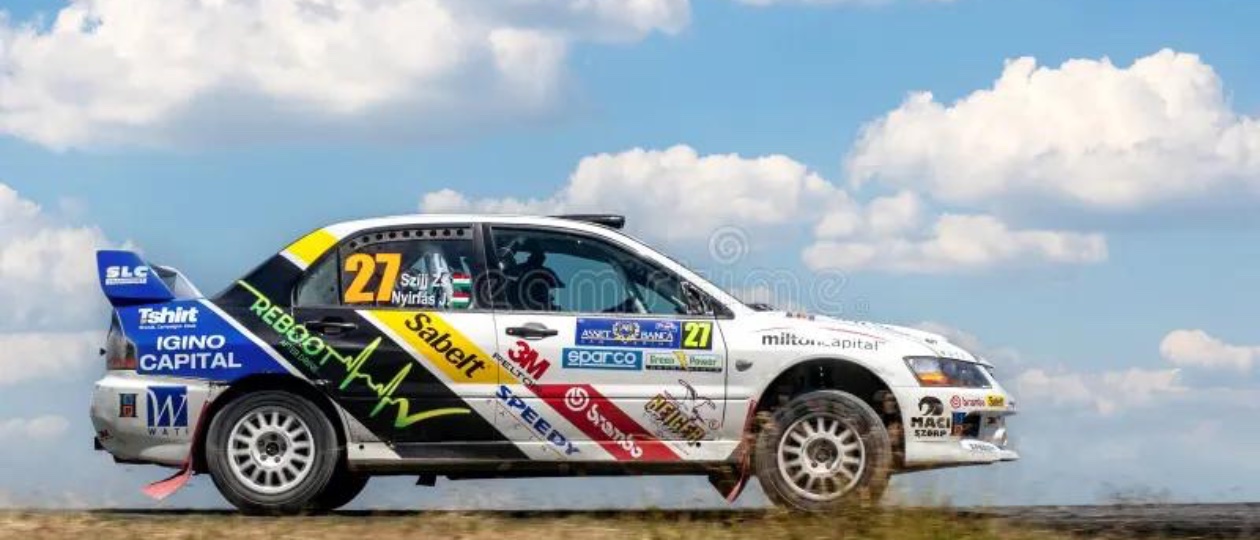
Mitsubishi Evo IX Buyer's Guide: The 4G63's Final Masterpiece
mitsubishi evo-ix · 2005–2007 · $30,000–$70,000
The Mitsubishi Evo IX is the final and greatest expression of the 4G63 turbo engine, the last Evo built before the series abandoned its rally-bred soul for the soft, CVT-available Evo X -- and its values are climbing accordingly.
History
The Mitsubishi Lancer Evolution IX arrived in 2005 as the culmination of a lineage that stretched back to the original Evo I in 1992. What began as a homologation special -- a sedan Mitsubishi needed to build in limited numbers to qualify for the World Rally Championship -- had evolved into something far more significant: a genuine supercar killer wearing the body of a family commuter. The Evo IX was the final chapter of that transformation, and the last time the legendary 4G63 turbocharged inline-four would power a production Evolution.
Mitsubishi's rally program was the reason the Evo existed at all. The company needed a Group A homologation vehicle, and rather than develop an entirely new platform, engineers took the mundane Lancer sedan and fitted it with a turbocharged 2.0-liter engine, all-wheel drive, and suspension tuned by people who spent their weekends sliding sideways through Finnish forests at 120 miles per hour. The result was a car that looked almost ordinary from twenty feet away but could humiliate sports cars costing three times as much on any road surface, in any weather condition.
By the time the Evo IX launched, the formula had been refined through eight previous generations. Each iteration brought incremental improvements -- better turbo response, sharper handling, more sophisticated all-wheel-drive systems -- but the core philosophy never wavered. The Evo was a rally car for the road, built by engineers who genuinely competed at the highest levels of international motorsport and brought that knowledge directly into the production vehicle.
The 4G63 engine in the Evo IX represented the apex of a design that dated back to 1981. This cast-iron block, aluminum head, DOHC sixteen-valve turbocharged four-cylinder had powered everything from compact sedans to industrial equipment, but in Evo IX trim it produced 286 horsepower and 289 lb-ft of torque -- figures that Mitsubishi famously understated to comply with Japan's gentleman's agreement power ceiling. Independent dyno testing consistently showed 300+ horsepower at the crank, and the engine's robust bottom end made it a tuner's dream. With nothing more than a boost controller, exhaust, and intake, an Evo IX could reliably produce 350-400 wheel horsepower on the stock internals.
The Evo IX also introduced MIVEC (Mitsubishi Innovative Valve timing Electronic Control) variable valve timing to the 4G63 for the first time, improving low-end torque response without sacrificing the top-end rush that made earlier Evos so addictive. Combined with the titanium-element turbocharger carried over from the Evo VIII MR, the result was an engine that pulled hard from 3,000 RPM to redline with minimal lag -- a dramatic improvement over the peaky, lag-prone early Evolutions.
The Evo IX's arrival coincided with the peak of the Mitsubishi-Subaru rivalry, a feud that had dominated rally stages and internet forums for over a decade. The contemporary Subaru Impreza WRX STI was the Evo's eternal nemesis, and the two cars pushed each other to extraordinary heights. Magazine comparison tests between the Evo IX and the STI became events unto themselves, and the consensus was remarkably consistent: the Evo was faster, sharper, and more rewarding on a circuit, while the STI was more livable and forgiving on the street. Both were brilliant. The Evo was just slightly more brilliant.
Production of the Evo IX ended in 2007, and with it ended the 4G63 era. The Evo X that followed in 2008 adopted an entirely new engine -- the 4B11 -- along with a new platform, available twin-clutch automatic transmission, and a design philosophy that prioritized broader market appeal over pure motorsport homologation. The Evo X was fast, refined, and entirely competent. It was also, unmistakably, the beginning of the end. Mitsubishi would discontinue the Evolution line entirely after the Evo X Final Edition in 2015, making the Evo IX the last of the true rally-bred homologation sedans -- the cars that existed because Mitsubishi needed them to go racing, not because a marketing department identified a demographic.
Variants
GSR
The GSR was the standard Evo IX for most markets and the variant most buyers will encounter. It paired the 4G63 MIVEC engine with a five-speed manual transmission, Brembo brakes, and Mitsubishi's sophisticated Super All-Wheel Control (S-AWC) system incorporating Active Center Differential (ACD) and Active Yaw Control (AYC). The AYC system actively vectored torque between the rear wheels using an electronically controlled differential, giving the Evo IX cornering capabilities that bordered on witchcraft. The GSR also included standard features like Recaro seats, a six-disc CD changer, and automatic climate control -- reminders that this was, nominally, still a Lancer sedan.
MR
The MR (Mitsubishi Racing) was the enthusiast's choice and the variant that commands the highest premiums today. It replaced the GSR's five-speed gearbox with a close-ratio six-speed manual, fitted bilstein shock absorbers, swapped the stock wheels for lightweight BBS forged units, and added an aluminum roof panel to reduce weight and lower the center of gravity. The MR's six-speed transmission transformed the driving experience -- the ratios were tighter, the shift action was crisper, and the additional gear allowed the engine to stay in its powerband more effectively during spirited driving. If you can find an MR in good condition, buy it.
RS
The RS was the lightweight, stripped-down variant that Mitsubishi intended as the base for club racing builds. It deleted the AYC system, fitted steel wheels, omitted many comfort features, and used a simpler rear limited-slip differential instead of the electronically controlled unit. The RS was the lightest Evo IX variant and, for many track-focused owners, the purest. It also came with a five-speed transmission.
SE (Special Edition)
The SE was a US-market-only variant limited to approximately 800 units. It was essentially a GSR with the six-speed transmission from the MR, bilstein shocks, and unique badging. The SE represented Mitsubishi's attempt to offer a middle ground between the standard GSR and the full MR specification, and it has become collectible in its own right due to its limited production numbers.
Wagon (JDM)
The Evo IX Wagon was available exclusively in Japan and remains one of the most desirable variants among collectors. It combined the full Evo IX drivetrain and performance package with a practical wagon body style, creating a vehicle that could carry a family's luggage to a ski resort while lapping a circuit faster than most sports cars. JDM-spec Evo IX Wagons are beginning to appear in the US market via the 25-year import rule, and they command strong premiums when they surface.
Common Issues
Transfer Case Wear
The Evo IX's transfer case is the single most expensive failure point on the car, and it's alarmingly common on vehicles that have been driven aggressively or modified without appropriate supporting upgrades. The ACD transfer case uses a multi-plate clutch pack to distribute torque between the front and rear axles, and the friction material in these clutch packs wears over time, particularly on cars running more than stock power. Symptoms include a grinding or chattering noise during tight turns, difficulty engaging or disengaging the ACD system, and eventually a complete loss of center differential functionality. A transfer case rebuild runs $2,000-$3,500, and it's a job you don't want to do twice -- use quality parts and address the root cause (usually excessive power without upgraded clutch packs).
Rust
The Evo IX's body panels are ordinary Lancer-grade steel, and Mitsubishi's corrosion protection was mediocre by early-2000s standards. Rear wheel arches, rocker panels, and the area around the rear subframe mounting points are the most common rust locations. Northern-climate cars and any Evo that has been exposed to road salt are particularly vulnerable. During a pre-purchase inspection, get the car on a lift and examine the underside carefully -- surface rust is manageable, but structural corrosion around the rear subframe mounts is a walk-away issue.
Crankshaft Walk
The 4G63 engine uses thrust bearings that can wear prematurely, allowing the crankshaft to shift axially -- a condition known as "crank walk." This was a more prevalent issue on the Evo VII and VIII than the IX, but it can still occur, particularly on cars that have been fitted with aggressive clutch setups that increase the axial load on the crankshaft. Symptoms include a grinding noise when depressing or releasing the clutch pedal, and in severe cases, the crankshaft can walk far enough to cause the timing belt to slip. Prevention is straightforward: use a quality clutch with an appropriate pressure plate and avoid twin-disc setups unless the thrust bearing situation has been addressed with upgraded components.
Turbo Failure
The Evo IX's turbocharger is generally reliable at stock boost levels, but many of these cars have been modified to run significantly higher boost pressures. A turbo that has been pushed beyond its design envelope will eventually fail -- usually signaled by oil consumption, blue smoke on deceleration, and reduced boost response. Stock replacement turbos are becoming scarce and expensive. Budget $1,500-$2,500 for a quality rebuilt unit or $2,500-$4,000 for a reputable aftermarket upgrade.
Clutch and Flywheel
The stock clutch is adequate for stock power but marginal for even mild modifications. An Evo IX producing 350+ wheel horsepower will slip the stock clutch under hard acceleration, particularly in higher gears. Budget $800-$1,500 for an aftermarket clutch kit, and consider a lightweight flywheel while you're in there -- the stock dual-mass flywheel is heavy and prone to developing chatter at high mileage.
Electrical Gremlins
The Evo IX's wiring harness is Lancer-grade, which means it wasn't designed for the vibration, heat, and electrical demands of a turbocharged performance car. Owners commonly report intermittent check engine lights, AYC warning messages, and sensor failures -- particularly the knock sensors, which are critical for the ECU's ability to manage boost and timing safely. If the check engine light is on during a test drive, don't dismiss it as "just an O2 sensor." Diagnose it properly before purchase.
Pricing Analysis
The Evo IX market has experienced a dramatic repricing over the past five years, driven by the same forces affecting the entire Japanese performance car segment: fixed supply, growing demand from millennials entering their peak earning years, and the realization that cars like the Evo IX represent the end of an era in automotive engineering.
Current Market Ranges (2026)
GSR:
- Project/high-mileage (100,000+ miles): $28,000-$35,000
- Driver-quality (60,000-100,000 miles): $38,000-$48,000
- Excellent condition (under 50,000 miles): $50,000-$60,000
MR:
- Driver-quality: $45,000-$58,000
- Excellent condition: $60,000-$75,000
- Low-mileage showroom examples: $80,000+
SE:
- Driver-quality: $42,000-$52,000
- Excellent condition: $55,000-$70,000
Market Trajectory
The Evo IX is tracking behind the Honda S2000 and Toyota Supra MK4 in terms of value trajectory, but it's following the same curve -- just shifted a few years to the right. The key inflection point will come as the Evo IX enters its 20th anniversary period (2025-2027), which historically triggers increased collector interest and media coverage.
Clean, unmodified examples are commanding progressively steeper premiums as the market recognizes how few stock Evo IXs actually survive. The car's tuner-friendly nature means the majority of examples have been modified, many heavily, which makes a genuinely stock car increasingly rare and valuable. If you find an unmolested MR with documented service history, act quickly -- these are disappearing from the market at an accelerating rate.
Inspection Checklist
The Evo IX inspection process demands extra vigilance because these cars have been modified, tracked, and abused at higher rates than almost any other vehicle in their price range. Assume every Evo has been driven hard until proven otherwise.
Exterior and Structure
- Rust inspection: Check rear wheel arches, rocker panels, rear subframe mounts, and the floor pan. Any structural rust near subframe mounts is a deal-breaker.
- Panel gaps and paint: Inconsistent gaps or mismatched paint indicate accident damage. Check the front bumper mounting points -- many Evos have been curbed or hit debris at speed.
- Underbody: Look for evidence of scraping, oil leaks, and aftermarket intercooler piping that may have been removed. Zip-tie marks and unused mounting holes tell stories.
Drivetrain
- Cold start: Listen for turbo whine, timing belt noise, and any knocking from the bottom end. The 4G63 should idle smoothly and quietly when cold.
- Boost test: With the owner's permission, perform a full-boost pull in third gear. The car should build boost smoothly and consistently to the factory peak (approximately 20 psi on stock tune). Boost spikes, drops, or hesitation indicate turbo, wastegate, or tune issues.
- Transfer case test: Drive the car in tight circles at low speed in a parking lot. Listen for grinding, chattering, or clicking from the center differential area. Any abnormal noise means the ACD clutch packs are worn.
- Clutch slip test: In fourth or fifth gear at 3,000 RPM, apply full throttle. If the RPMs rise faster than the car accelerates, the clutch is slipping.
- Transmission feel: All gears should engage smoothly. Second gear crunch is common on abused examples.
Interior and Modifications
- ECU check: Ask if the ECU has been flashed or replaced. Many Evos run aftermarket ECU tunes that can mask mechanical issues. An OpenECU or EcuFlash reflash isn't necessarily bad, but you need to know what tune the car is running.
- Boost controller: Check for aftermarket boost controllers. If one is present, verify the boost target -- anything above 22 psi on stock internals is pushing the engine's limits.
- Modification quality: If the car has been modified, evaluate the quality of the work. Clean wiring, proper clamp placement, and professional-grade parts indicate a knowledgeable owner. Zip ties, electrical tape, and eBay parts indicate the opposite.
Maintenance Guide
The Evo IX rewards diligent maintenance and punishes neglect with expensive failures. These are race-bred machines wearing economy car clothing, and they demand a maintenance regimen that reflects their performance capability.
Engine Oil
Use a quality full-synthetic 5W-30 or 5W-40 oil and change it every 3,000-4,000 miles. The 4G63 operates under extreme thermal and mechanical stress, and fresh oil is the cheapest insurance against bearing failure, turbo wear, and premature cam wear. If you track the car, change the oil after every event regardless of mileage. Monitor oil pressure -- the 4G63 should show 40+ psi at operating temperature at idle and 60+ psi under load. Declining oil pressure is an early warning of bearing wear.
Timing Belt
The 4G63 is an interference engine with a timing belt -- not a chain. The belt must be replaced every 60,000 miles without exception. A failed timing belt will cause the pistons to contact the valves, destroying the engine. Budget $400-$700 for a timing belt service including the tensioner, idler pulleys, and water pump. This is not a job to defer or skip.
Transfer Case Fluid
Change the transfer case fluid every 15,000 miles using genuine Mitsubishi DiaQueen or an equivalent GL-4 75W-85 gear oil. The ACD clutch packs depend on clean, fresh fluid to operate correctly, and contaminated fluid accelerates wear exponentially. This is a $30 maintenance item that prevents a $3,000 repair.
Turbo Maintenance
Allow the turbo to cool down after hard driving by idling the car for 60-90 seconds before shutting off the engine. This allows oil to continue circulating through the turbo bearings as they spin down, preventing oil coking that leads to premature turbo failure. An aftermarket turbo timer can automate this process.
Coolant System
The Evo IX's cooling system is adequate for street use but marginal under sustained track loads. Flush the coolant every 30,000 miles and inspect the radiator hoses, thermostat, and water pump. If you track the car, an aftermarket aluminum radiator is a worthwhile investment -- the stock plastic-tanked radiator can crack under repeated thermal cycling.
Brake Maintenance
The Brembo brakes are excellent but demand quality pads and rotors. Use a high-performance street pad for daily driving and swap to a dedicated track pad for circuit use. Brake fluid should be flushed every 12 months with a DOT 4 or DOT 5.1 fluid -- the Evo's braking system generates significant heat, and old fluid with absorbed moisture will boil and cause pedal fade.
Insurance
Insurance for the Evo IX falls into the same trap as other appreciating Japanese performance cars -- standard carriers consistently undervalue these vehicles, leaving owners exposed to tens of thousands of dollars in potential loss during a total loss claim. A State Farm or Geico policy might value your Evo IX at $18,000-$25,000 based on depreciation tables that don't account for the collector market reality.
Hagerty
Hagerty understands the Evo IX market and offers agreed-value policies that reflect current collector pricing. Expect annual premiums of $1,000-$2,000 for a $40,000-$60,000 agreed value, depending on your driving record, annual mileage, and storage situation. Hagerty's valuation tools are particularly useful for tracking the Evo IX market -- they aggregate auction data and provide quarterly valuation updates that help you keep your agreed value current.
American Collectors
American Collectors provides competitive agreed-value coverage with somewhat more flexible usage restrictions than Hagerty. Their policies work well for Evo IX owners who use their cars as occasional daily drivers rather than pure weekend toys. Premiums are typically 10-20% lower than Hagerty for comparable coverage.
Insurance Strategy
The critical step is securing an agreed-value policy through a specialty insurer before you need it. The gap between what a standard carrier would pay and what your Evo IX is actually worth on the collector market can easily exceed $30,000 -- that's not a risk worth taking to save $500 per year on premiums.
If you track your Evo IX, verify your policy's stance on high-performance driving events. Most agreed-value policies exclude competitive events, and some exclude even non-competitive track days. An HPDE endorsement typically costs $200-$400 per event and is worth every penny.
The Honda S2000 and Toyota Supra MK4 face identical insurance dynamics -- these Japanese performance icons are all appreciating faster than standard insurance models can track, making specialty coverage essential for any serious owner.
Insure Your evo-ix
Agreed-value policies are essential for appreciating classics. Lock in today's value before the market moves.
Find Your evo-ix
Browse current listings and recently sold examples to find the right one at the right price.
Parts & Maintenance
Keep your evo-ix running strong with OEM and quality aftermarket parts.
Recommended Tools
Our curated list of tools for evo-ix owners -- from basic maintenance to weekend wrenching.
Need advice on this car?
Chat with us on WhatsApp — get the Pre-Purchase Inspection Checklist, ask about pricing, or tell us about yours.
Chat with us on WhatsAppRecent Auction Activity
- Auction Watch: Week 11, 2026March 9, 2026