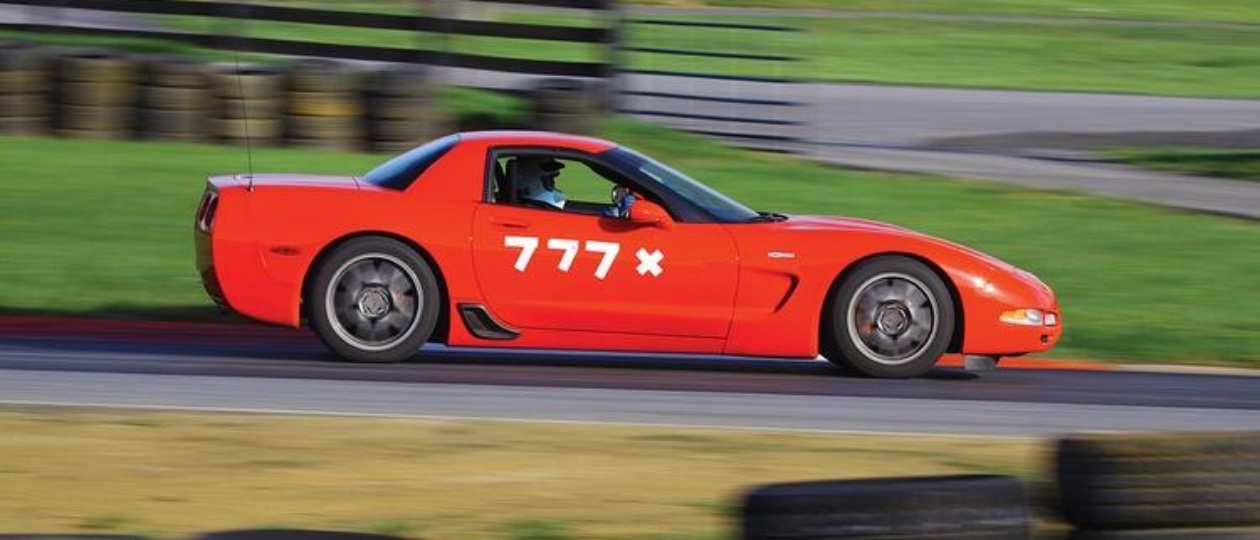
C5 Corvette Z06 Buyer's Guide: The Greatest Performance Bargain in Automotive History
chevrolet c5-z06 · 2001–2004 · $25,000–$55,000
The C5 Corvette Z06 is the greatest performance bargain in automotive history -- an LS6-powered, sub-3,200-pound track weapon with parts available at every AutoZone, proving that you never needed a European badge to go fast.
History
The C5 Corvette Z06 was General Motors' answer to a question that European automakers had been answering incorrectly for decades: how much performance can you deliver per dollar spent? The answer, it turned out, was a staggering amount. When the Z06 debuted for the 2001 model year, it offered 385 horsepower from the LS6 V8 engine, weighed under 3,200 pounds, and carried a sticker price of approximately $47,500. For context, a comparably performing Porsche 911 Turbo cost nearly three times as much, and a Ferrari 360 Modena cost four times as much. The Z06 wasn't just competitive with these cars on a racetrack -- it was often faster.
The Z06 name itself carried historical weight. Chevrolet had used the RPO Z06 code on the legendary 1963 Corvette race package, a $1,818.45 option that transformed the Split Window coupe into one of the most fearsome production race cars of the 1960s. Reviving the Z06 badge for the C5 was a deliberate signal: this Corvette was built for the track.
Dave Hill, the C5's chief engineer, understood that the way to make a Corvette faster wasn't simply to add more power -- it was to subtract weight. The C5 Z06 used a Fixed Roof Coupe (FRC) body style that was stiffer and lighter than the standard coupe's Targa-top design. The removable roof panel was eliminated, replaced by a fixed carbon fiber-reinforced panel that reduced weight while increasing torsional rigidity by approximately 12%. The Z06 also received a titanium exhaust system that saved 17 pounds, thinner glass, a lighter battery, and deleted features like the fog lamps and the active handling system's more conservative traction control mode.
The LS6 engine that powered the Z06 was not merely a rebadged LS1. While it shared the LS1's fundamental architecture -- an all-aluminum, pushrod, overhead-valve V8 with a 5.7-liter displacement -- the LS6 received significant upgrades. The camshaft profile was more aggressive, the cylinder heads were ported for better airflow, the intake manifold was redesigned with shorter, higher-velocity runners, the compression ratio was raised to 10.5:1, and the valvetrain was optimized for higher RPM operation. The result was 385 horsepower and 385 lb-ft of torque in the 2001 model, increased to 405 horsepower and 400 lb-ft for 2002-2004 after additional cylinder head revisions and a freer-flowing exhaust.
The C5 Z06 arrived during a remarkable period for American performance cars. The fourth-generation F-body Camaro and Firebird were still in production, the Dodge Viper was establishing its own legacy, and the Ford Mustang Cobra R was demonstrating what a Blue Oval could do without compromise. But the Z06 occupied a unique position in this landscape. It wasn't a muscle car -- it was a legitimate sports car, one that could compete with the finest products from Stuttgart, Maranello, and Munich on equal terms while being serviced at any Chevrolet dealer in America with parts available from the local auto parts store.
The car's competition credentials were validated almost immediately. The C5-R racing program, which ran from 1999 to 2004, saw the Corvette win its class at the 24 Hours of Le Mans, the 24 Hours of Daytona, and the 12 Hours of Sebring -- victories that directly informed the development of the production Z06. When Chevrolet engineers improved the C5-R's cooling system, the production Z06 received similar upgrades. When the race car's aero package was refined in the wind tunnel, the production car's front splitter and rear spoiler were adjusted accordingly. The connection between racetrack and showroom was not marketing fiction -- it was engineering reality.
The C5 Z06's competitive context also included the BMW E39 M5, which represented a fundamentally different philosophy of performance. Where the M5 was a hand-assembled precision instrument with a $70,000 price tag and maintenance costs to match, the Z06 offered comparable straight-line speed and superior track performance for $20,000 less, with maintenance costs measured in hundreds rather than thousands. The two cars targeted the same performance enthusiast but from opposite directions -- European engineering pedigree versus American engineering pragmatism.
Production of the C5 Z06 ended after the 2004 model year with the Commemorative Edition, distinguished by its Le Mans Blue exterior and Shale interior with special embroidery. The C6 Z06 that followed for 2006 was a phenomenal car in its own right -- with the 7.0-liter LS7 engine and a price tag that climbed above $65,000 -- but the C5 Z06 remains the purest expression of the Corvette-as-working-man's-supercar philosophy. It proved that you didn't need a six-figure budget, a trust fund, or a European pedigree to own a genuine track weapon. You just needed a Chevy dealer and the good sense to check the Z06 box on the order form.
Variants
Z06 (2001) -- 385 Horsepower
The inaugural C5 Z06 established the formula: LS6 engine, FRC body, weight reduction, and suspension tuning optimized for the track. The 2001 model produced 385 horsepower and 385 lb-ft of torque and weighed 3,115 pounds -- giving it a power-to-weight ratio that embarrassed sports cars costing twice as much. The suspension used stiffer springs, firmer Bilstein monotube shocks, larger anti-roll bars, and revised rear toe links. The standard Goodyear Eagle F1 SC tires were developed specifically for the Z06 and offered exceptional grip for a factory tire.
The 2001 Z06 is distinguished by its Quicksilver wheels -- a design unique to the first model year. These cars represent the beginning of the Z06 story and are gaining collector attention, particularly low-mileage examples in desirable colors.
Z06 (2002-2004) -- 405 Horsepower
For 2002, Chevrolet increased the LS6's output to 405 horsepower and 400 lb-ft of torque through revised cylinder heads with improved port work, a new camshaft profile, and a redesigned exhaust system with lower back-pressure. The 2002-2004 cars also received a stiffer front stabilizer bar, retuned shock absorber valving, and an updated rear differential cooler.
The 2002-2004 Z06 is the sweet spot of the lineup for most buyers: maximum power, refined suspension tuning, and typically lower mileage than the 2001 model due to higher production numbers. These cars are the most common C5 Z06 variant and currently offer the best value-for-performance in the C5 market.
Commemorative Edition (2004)
The final C5 Z06 was the 2004 Commemorative Edition, celebrating the Corvette's racing heritage with a Le Mans Blue exterior and Shale leather interior. Each Commemorative Edition received special badges, embroidered headrests, and a certificate of authenticity. Approximately 2,025 Commemorative Edition Z06s were produced, and they've become the most collectible C5 Z06 variant.
The Commemorative Edition was mechanically identical to the standard 2004 Z06, but its limited production and historical significance -- it was the last C5 Z06 and the last Corvette to use the LS6 engine -- have elevated its collector status. Clean examples are commanding a $5,000-$10,000 premium over equivalent standard 2004 Z06s.
Common Issues
Harmonic Balancer Failure
The C5 Z06's most significant mechanical issue is the harmonic balancer (crankshaft pulley), which uses a bonded rubber ring to isolate engine vibrations. Over time, the rubber deteriorates and the outer ring can separate from the inner hub -- sometimes violently, at high RPM, destroying the serpentine belt and anything in the path of the departing ring. This is a well-documented issue affecting all C5 Corvettes but especially the Z06 due to higher engine RPM usage.
The fix is straightforward: replace the factory harmonic balancer with an ATI Super Damper or equivalent aftermarket unit designed without the bonded rubber. Cost is $250-$400 for the part plus $200-$400 for installation. This should be done proactively on any C5 Z06 with the original balancer, regardless of mileage -- it's a when-not-if failure.
Rear Leaf Spring Clunk
The C5 Corvette's composite rear leaf spring -- a fiberglass transverse unit mounted to the rear subframe -- can develop a clunk or knocking sound over rough surfaces. This is typically caused by worn spring pads or shims rather than the spring itself failing. The composite spring is actually remarkably durable and rarely cracks, but the mounting hardware needs attention at 60,000-80,000 miles. Budget $200-$500 for a spring pad replacement at an independent shop.
Column Lock Failure
The C5 Corvette uses an electronic steering column lock that can fail, preventing the car from starting. This is a design defect that affects all C5 models and typically manifests as a "Service Column Lock" message on the dashboard. The fix is to disable the column lock module -- a $150-$300 job at a Corvette specialist. Many owners proactively disable this module to avoid being stranded.
Window and Headlight Motor Issues
The C5's pop-up headlights and power windows use electric motors that can fail with age. Headlight motor replacement is straightforward and inexpensive ($100-$200 per side). Window regulators follow the same pattern as the headlight motors -- eventual failure is inevitable, but replacement is easy and cheap.
Clutch Shudder
The C5 Z06's dual-mass flywheel can develop a shudder during clutch engagement, particularly when starting from a stop on an incline. The dual-mass flywheel absorbs drivetrain vibrations but wears over time, and when it does, the result is an unpleasant judder. The solution is a single-mass flywheel conversion with a quality clutch kit -- a $600-$1,000 upgrade that eliminates the issue permanently and reduces rotating mass.
Rear Differential Whine
A mild whine from the rear differential at highway speeds is common on C5 Z06s and generally not indicative of imminent failure. The limited-slip differential uses clutch packs that wear over time, and fresh fluid (GM-spec 75W-90 synthetic with friction modifier) often reduces the noise significantly. A differential rebuild is typically only necessary at 100,000+ miles or if the whine becomes pronounced.
Pricing Analysis
The C5 Z06 market has awakened. For years, these cars were the ultimate performance bargain -- 400+ horsepower, sub-3,200-pound weight, and a buy-in price under $20,000. That era is ending. Values have climbed steadily since 2021, and the trajectory suggests continued appreciation as the enthusiast community recognizes the C5 Z06's historical significance.
Current Market Ranges (2026)
2001 Z06 (385hp):
- Project/high-mileage (100,000+ miles): $22,000-$28,000
- Driver-quality (50,000-80,000 miles): $30,000-$38,000
- Excellent condition (under 40,000 miles): $40,000-$50,000
2002-2004 Z06 (405hp):
- Project/high-mileage: $24,000-$32,000
- Driver-quality: $33,000-$42,000
- Excellent condition: $45,000-$55,000
2004 Commemorative Edition:
- Driver-quality: $38,000-$48,000
- Excellent condition: $52,000-$65,000
Market Trajectory
The C5 Z06 is following the appreciation curve established by earlier performance Corvettes -- the C2 and C3 big-blocks appreciated first, followed by the C4 ZR-1, and now the C5 Z06 is next in line. The car's affordability was both its greatest asset and the reason the market undervalued it for so long. When you can buy a 400-horsepower track car for the price of a used Accord, people don't take it seriously as a collector car. That perception is changing.
Several factors support continued appreciation. The LS6 engine is an icon in the LS architecture family -- the most powerful factory small-block of the C5 era. The FRC body style is unique to the Z06 and distinguishes it visually from the far more common convertible and Targa-top C5s. And the car's competition heritage -- class wins at Le Mans, Daytona, and Sebring -- provides the kind of documented provenance that collector car markets reward.
The BMW E39 M5 represents the C5 Z06's most interesting market comparison. Both cars were produced in the same era, both offered extraordinary performance, and both are now appreciated as the last of their kind -- the last naturally aspirated M5, the last LS6 Z06. The M5 currently commands a price premium of roughly 50-80% over the Z06, despite the Z06's superior track performance. Whether the market is correctly pricing this gap or whether the Z06 is simply undervalued relative to its European contemporaries is a question worth considering before you buy.
Inspection Checklist
The C5 Z06 is one of the most mechanically straightforward performance cars you can buy, but its relative affordability means many examples have been abused, modified, and crashed. A thorough inspection is essential.
Exterior and Structure
- Frame condition: The C5 uses a hydroformed steel frame with a fiberglass body. Inspect the frame rails for collision damage, corrosion, or poorly repaired accident damage. Unlike a unibody car, frame damage on a C5 is visible and obvious to a trained eye.
- Body panel fit: Check for gaps, cracks, or misaligned panels. The fiberglass body panels don't rust but they do crack on impact, and repairs can be difficult to spot if done well.
- Paint condition: Certain C5 colors (particularly Torch Red and Millennium Yellow) are prone to clear coat failure. Inspect the roof, hood, and rear deck for peeling or hazing.
Drivetrain
- Harmonic balancer: With the hood open, visually inspect the crankshaft pulley for any wobble, outer ring separation, or rubber deterioration. Spin the balancer by hand and check for looseness. If the original balancer is still installed, budget for an immediate replacement.
- Cold start: The LS6 should start immediately and idle smoothly at approximately 600-700 RPM. Listen for valve train ticking (normal on LS engines due to the hydraulic roller lifter design), but any deep knocking or bearing noise is a red flag.
- Clutch operation: Test the clutch engagement through several gears, including starts from a stop on a hill. Shudder indicates a worn dual-mass flywheel.
- Rear differential: Listen for whine at highway speed (65-75 MPH) during coast and cruise. Mild whine is normal; pronounced howling or grinding is not.
Suspension
- Leaf spring inspection: Visually inspect the rear composite leaf spring for cracks, delamination, or sagging. Check the spring pad condition by bouncing the rear of the car -- clunking indicates worn pads.
- Shock absorber condition: The Z06's Bilstein monotube shocks are excellent but wear out after 60,000-80,000 miles of aggressive driving. Bounce each corner of the car -- it should settle in one cycle without continued bouncing.
- Tire condition: The Z06 uses staggered width tires (265 front, 295 rear). Uneven wear patterns indicate alignment issues or worn suspension bushings.
Electronics
- Column lock: Check for the "Service Column Lock" warning. If it appears, the column lock module needs to be disabled -- a known issue, not a deal-breaker, but a negotiation point.
- Headlight operation: Cycle both headlights up and down multiple times. Slow or hesitant operation indicates motor wear.
- Instrument cluster: The C5's instrument cluster is known for stepper motor failures that cause gauges to read incorrectly. Verify that the tachometer, speedometer, and temperature gauge all read correctly.
Maintenance Guide
The C5 Z06 is one of the simplest and least expensive performance cars to maintain, which is a significant part of its appeal. The LS6 engine is a pushrod design with no timing belt, no variable valve timing solenoids, no dual-clutch transmission, and no turbocharger -- just a camshaft, pushrods, rockers, and valves doing honest work.
Engine Oil
Use a quality 5W-30 full synthetic oil and change it every 5,000 miles or annually. The LS6's oil capacity is approximately 6.5 quarts with filter. Monitor oil consumption -- the LS6 uses piston rings with a slightly looser clearance than the LS1 to accommodate higher RPM operation, and some oil consumption (up to one quart per 3,000 miles) is considered normal by GM. If consumption exceeds this rate, investigate the PCV system before assuming internal engine wear.
Cooling System
The Z06's cooling system is more robust than the standard C5 but still requires attention. Flush the coolant every 60,000 miles or 5 years using Dex-Cool or an equivalent long-life coolant. The water pump uses a composite impeller that can degrade over time -- inspect or replace it preventively at 100,000 miles. The radiator is aluminum and generally trouble-free, but check the end tanks for hairline cracks during any coolant service.
Transmission
The Z06's Tremec T56 six-speed manual transmission is extremely durable but appreciates quality lubricant. Change the transmission fluid every 30,000 miles using a quality GL-4 synthetic gear oil -- Mobil 1 Synthetic Gear Oil or Royal Purple Synchromax are popular choices. Fresh fluid transforms the shift quality, particularly when cold.
Harmonic Balancer
Replace the factory harmonic balancer proactively if it hasn't been done. An ATI Super Damper ($300-$400) is the gold standard replacement. This is not optional maintenance -- it's a necessary upgrade that prevents a known failure mode. If the car still has its original balancer, schedule this service immediately after purchase.
Brakes
The Z06's brakes are adequate for enthusiastic street driving but marginal for sustained track use. For street duty, use a quality semi-metallic or ceramic compound pad and replace rotors when they reach minimum thickness or develop significant scoring. Budget $300-$500 for a complete set of pads and rotors. For track use, upgrade to a dedicated track pad compound and consider stainless steel brake lines for improved pedal feel and heat resistance.
Rear Leaf Spring Maintenance
Inspect the composite rear leaf spring and its mounting hardware annually. Lubricate the spring contact points with a silicone-based lubricant to prevent the clunk that develops as the spring pads wear. Replace the spring pads at 60,000-80,000 miles or at the first sign of noise.
Differential Service
Change the rear differential fluid every 30,000 miles using a GM-spec 75W-90 synthetic gear oil with a friction modifier additive (required for the limited-slip clutch packs). Fresh differential fluid reduces noise, improves engagement, and extends the life of the clutch packs.
Insurance
The C5 Z06 is entering the period where standard insurance becomes increasingly inadequate. As values climb from the mid-$30,000s toward the $50,000+ range for excellent examples, the gap between what GEICO thinks your car is worth and what the market will actually pay is widening.
Hagerty
Hagerty offers agreed-value policies for the C5 Z06 with premiums that remain surprisingly reasonable -- typically $600-$1,200 per year for a $30,000-$50,000 agreed value. Hagerty's Corvette expertise is deep, and their valuation team understands the Z06's specific market dynamics, including the premium commanded by the Commemorative Edition and low-mileage examples. Their coverage includes parts and tools in the car at the time of a loss -- relevant for Z06 owners who carry a track day kit in the hatch area.
American Collectors
American Collectors is a strong alternative for C5 Z06 owners who drive their cars regularly. Their usage restrictions tend to be less stringent than Hagerty's, and they're comfortable insuring cars that are daily-driven or used for regular weekend cruising. Premiums are competitive with Hagerty, and their claims process is straightforward.
Insurance Strategy
The C5 Z06's position in the market -- transitioning from "cheap used sports car" to "collectible performance car" -- makes insurance strategy particularly important right now. If your car is insured by a standard carrier with an actual cash value policy, there's a meaningful risk that their valuation model hasn't caught up with the collector market reality. A total loss claim on a standard policy might yield $18,000-$22,000 for a car worth $35,000-$45,000 on Bring a Trailer. That's a gap worth closing.
For track-active Z06 owners -- and if you own a Z06, you should be tracking it -- an HPDE endorsement is essential. The Z06 was designed for the track, and its combination of power, grip, and predictable handling makes it one of the most rewarding track day cars at any price point. Most agreed-value policies exclude damage during competitive events, but many offer HPDE endorsements for $200-$400 per event. This is non-negotiable insurance for anyone who uses their Z06 as intended.
The Porsche 944 Turbo occupies a similar position in the market -- a car that was long undervalued as a "lesser" model from a premium brand and is now appreciating as the market recognizes its genuine quality. The Z06 and the 944 Turbo share another common trait: both are cars where the performance-per-dollar ratio is so skewed in the buyer's favor that the market seems almost embarrassed about it. That embarrassment is slowly fading, and values are rising accordingly.
Insure Your c5-z06
Agreed-value policies are essential for appreciating classics. Lock in today's value before the market moves.
Find Your c5-z06
Browse current listings and recently sold examples to find the right one at the right price.
Parts & Maintenance
Keep your c5-z06 running strong with OEM and quality aftermarket parts.
Recommended Tools
Our curated list of tools for c5-z06 owners -- from basic maintenance to weekend wrenching.
Need advice on this car?
Chat with us on WhatsApp — get the Pre-Purchase Inspection Checklist, ask about pricing, or tell us about yours.
Chat with us on WhatsAppRecent Auction Activity
- Auction Watch: Week 11, 2026March 9, 2026